




THE STORY BEHIND THIS INVENTION :
One day, while walking through my city, I noticed a common problem—waste scattered on roadsides, streets, and public places. Although dustbins were available in some locations, many people still threw garbage on the ground. Some people used the bins responsibly, but others were often too lazy or unwilling to walk a few extra steps to dispose of their waste properly.
This made me think deeply about the problem. Instead of expecting people to always go to the dustbin, what if the dustbin could go to the waste? That simple idea became the inspiration for my project.
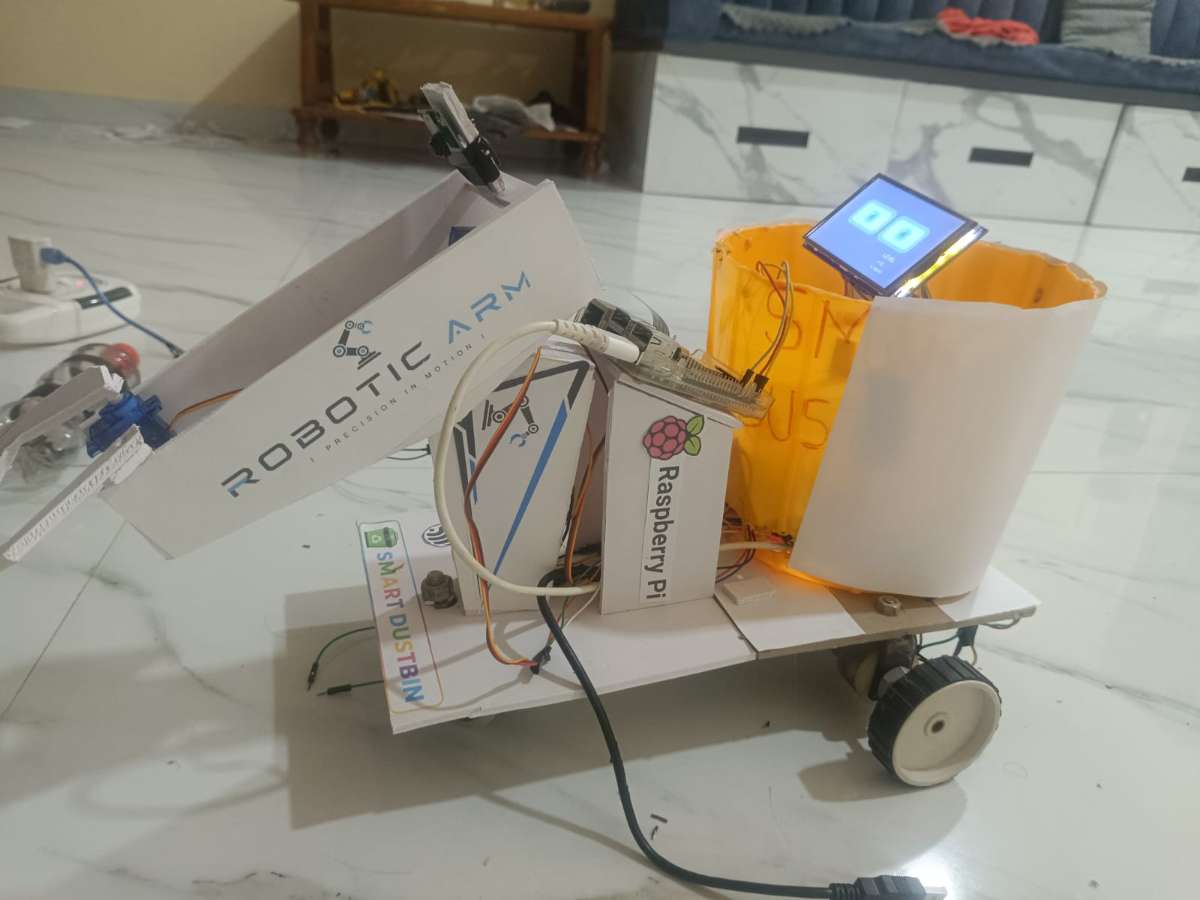
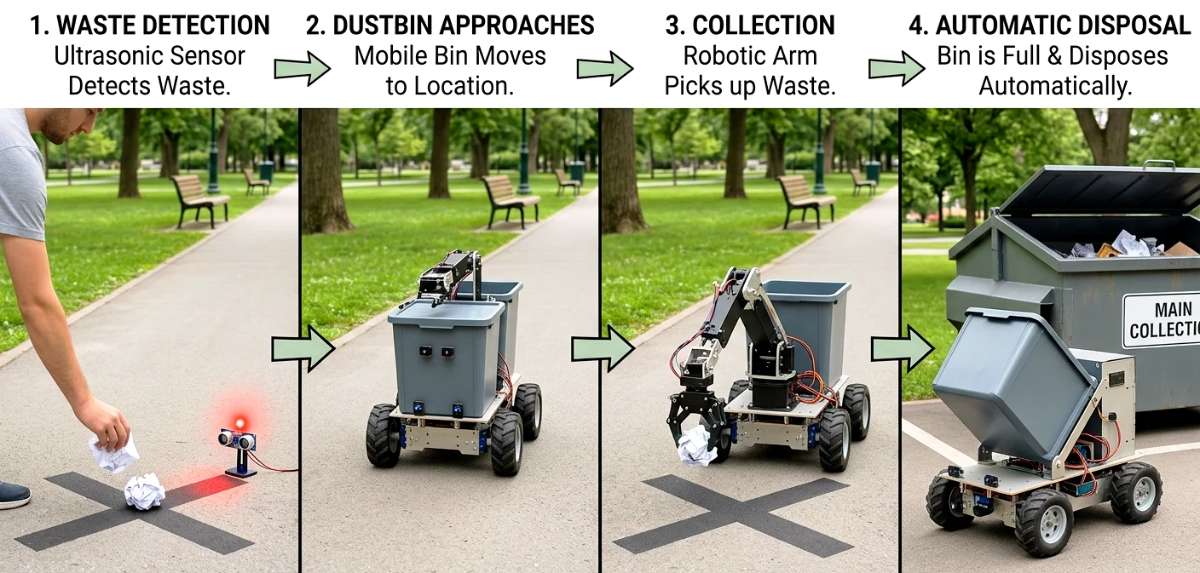
I designed a Smart Robotic Dustbin that can move towards detected waste on its own. Using a camera, sensors, and artificial intelligence, the system identifies trash lying on the ground. A robotic arm then picks up the waste and places it inside the dustbin. In this way, the dustbin actively collects litter instead of waiting for people to throw it away.
.jpeg)
Chapter 1: Initial Idea and ESP32-CAM Implementation
• Selected ESP32-CAM because of prior experience with the module.
• Planned to use it for:
• Live video streaming
• Real-time trash detection
Successfully achieved trash detection.
Faced a major issue: extremely slow image processing due to limited RAM and processing power.
Spent 15 days optimizing code and improving video streaming performance.
Despite multiple optimizations, the system remained too slow for practical deployment.
Chapter 2: Research and Problem Analysis
• Conducted extensive research for approximately 5 days.
• Read technical articles, documentation, and online forums.
• Identified the root cause:
• Limited hardware resources of the ESP32-CAM.
• Insufficient memory and computational capability for simultaneous video streaming and object detection.
• Decided to explore a more powerful platform.
Chapter 3: Migration to Raspberry Pi 3
• Switched to a Raspberry Pi 3 with a Raspberry Pi Camera V2.
• Expected significant performance improvements.
• Observed better performance compared to ESP32-CAM.
• Trash detection accuracy was satisfactory.
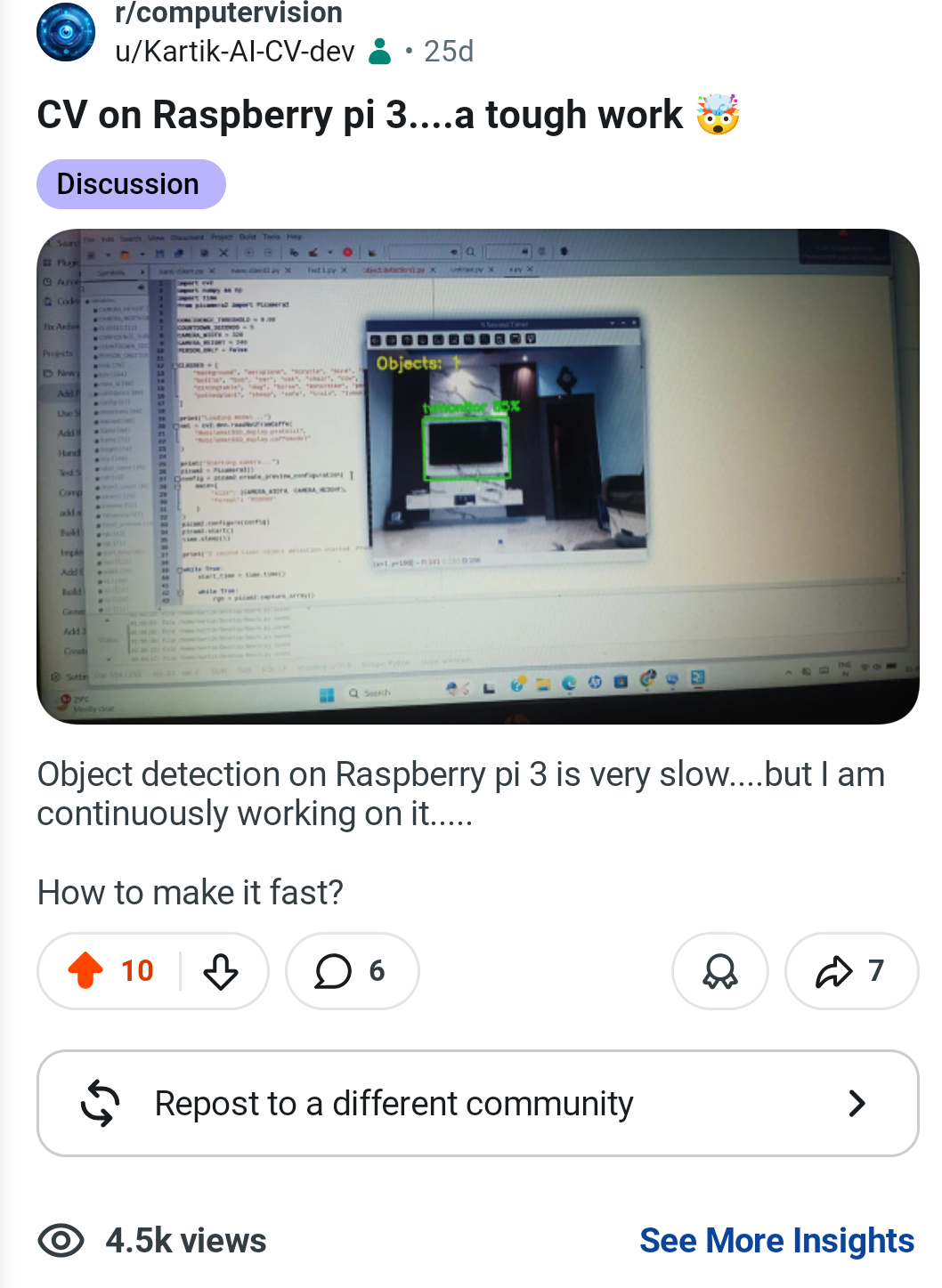
However, video processing still experienced delays during real-time operation.
Delays negatively affected:
• Motor control
• Robotic arm movement
• Overall system efficiency
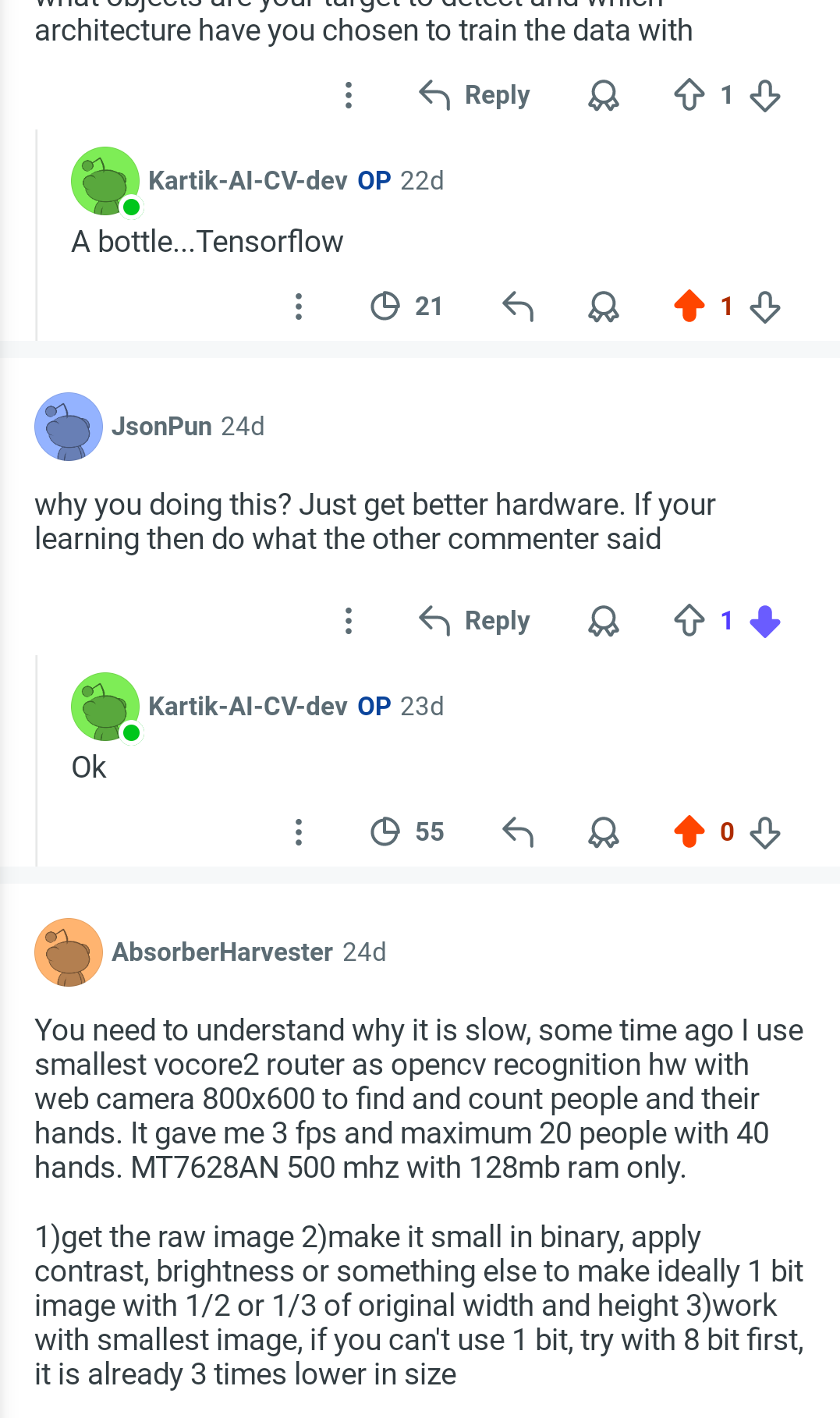
Replies from people regarding this problem:
Chapter 4: System Optimization and AI Server Solution
Worked continuously for 3–4 days to optimize performance.
• Analyzed processing bottlenecks.
• Concluded that heavy AI computations required more computational power.
• Developed a distributed architecture:
• Laptop Server: AI processing and object detection.
• Raspberry Pi 3: Communication and hardware control.
Acknowledged that newer boards like Raspberry Pi 5 could handle such workloads more effectively, but only Raspberry Pi 3 was available.
Successfully improved overall system responsiveness.
Chapter 5: Mechanical Design and Prototype Development
Chose not to use any 3D-printed components.
Constructed the entire prototype using:
• Thick foam sheets
• Locally available materials
Faced challenges in:
• Building a stable mobile platform
• Designing the robotic arm
• Integrating electronic components
Redesigned multiple components several times:
• Robotic arm structure
• Dustbin body
• Vehicle chassis
Iteratively improved the prototype until achieving the final design.
Chapter 6: Lessons Learned and Final Outcome
•Learned that innovation requires persistence and continuous improvement.
Understood the importance of:
• Hardware selection
• System optimization
• Problem-solving under constraints
Every failure provided valuable insights for the next iteration.
Spent approximately 25–30 days overcoming technical and design challenges.
Successfully developed SmartBin X, transforming setbacks into learning opportunities and practical solutions.
Key Challenges Faced
1. Limited processing power of ESP32-CAM.
2. Slow real-time object detection.
3. Video processing delays on Raspberry Pi
4. Integration of AI, communication, and hardware control.
5. Designing a stable robotic arm and mobile platform without 3D printing.
6. Multiple prototype redesigns before finalization.
Key Achievements
1. Developed a functional AI-powered smart waste collection system.
2. Implemented real-time trash detection.
3. Created a distributed AI architecture using a laptop server and Raspberry Pi.
4. Built a complete prototype using low-cost, locally available materials.
5. Successfully overcame hardware, softare and design limitations through engineering innovation.
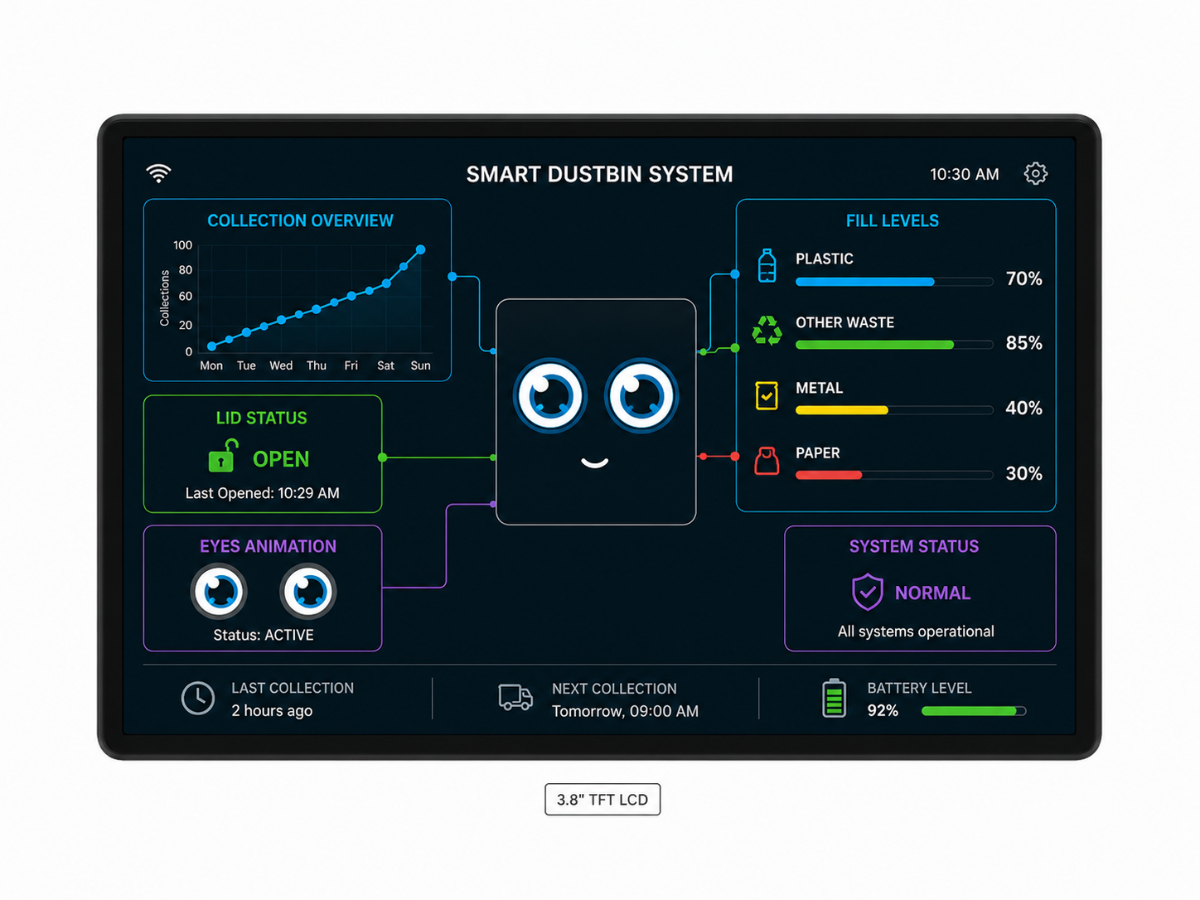
FEATURES OF TFT LCD DISPLAY:
.jpeg)
You can view my video with full detailed and practical working:
video
https://youtu.be/f-xvfJ9c-Bc?si=AtUx4J2pqJKXUAqb
I started working on this smart bin project with this idea💡:
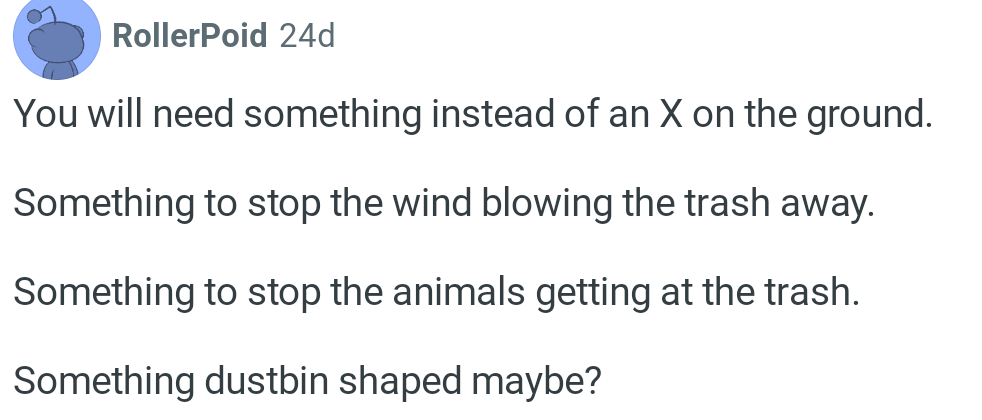
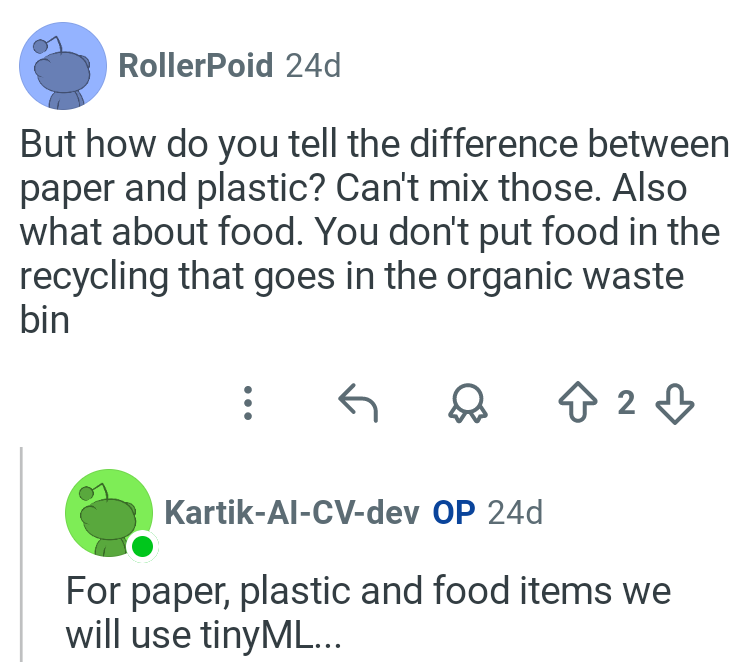
But I got some comments from tech people that this project is not practical :
I wanted to implement:
My goal was to integrate a 3D LiDAR-based mapping and navigation system that would allow SmartBin X to create a 3D representation of its surroundings, move autonomously within a designated area, and efficiently collect waste without human intervention and smart waste segregation but due to low resources I was unable .....
If these two things are successfully implemented in it then this project would be really more exciting.....
.jpeg)
As this project is made for the welfare of people, I posted it on social media to see whether people would like it.
And people really appreciated it ......
Also I got some good responses and appreciation from Tech Companies like Qualcomm.....🎊

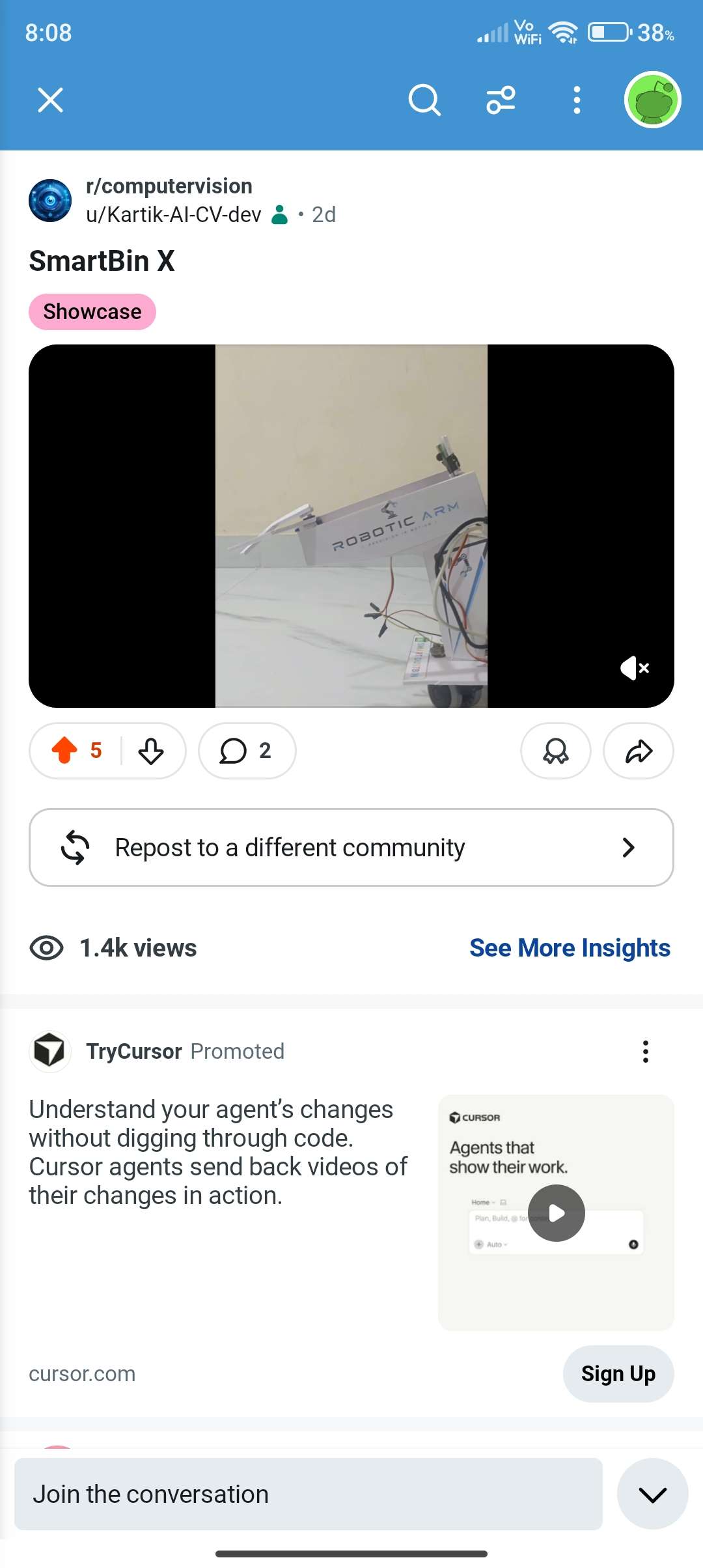
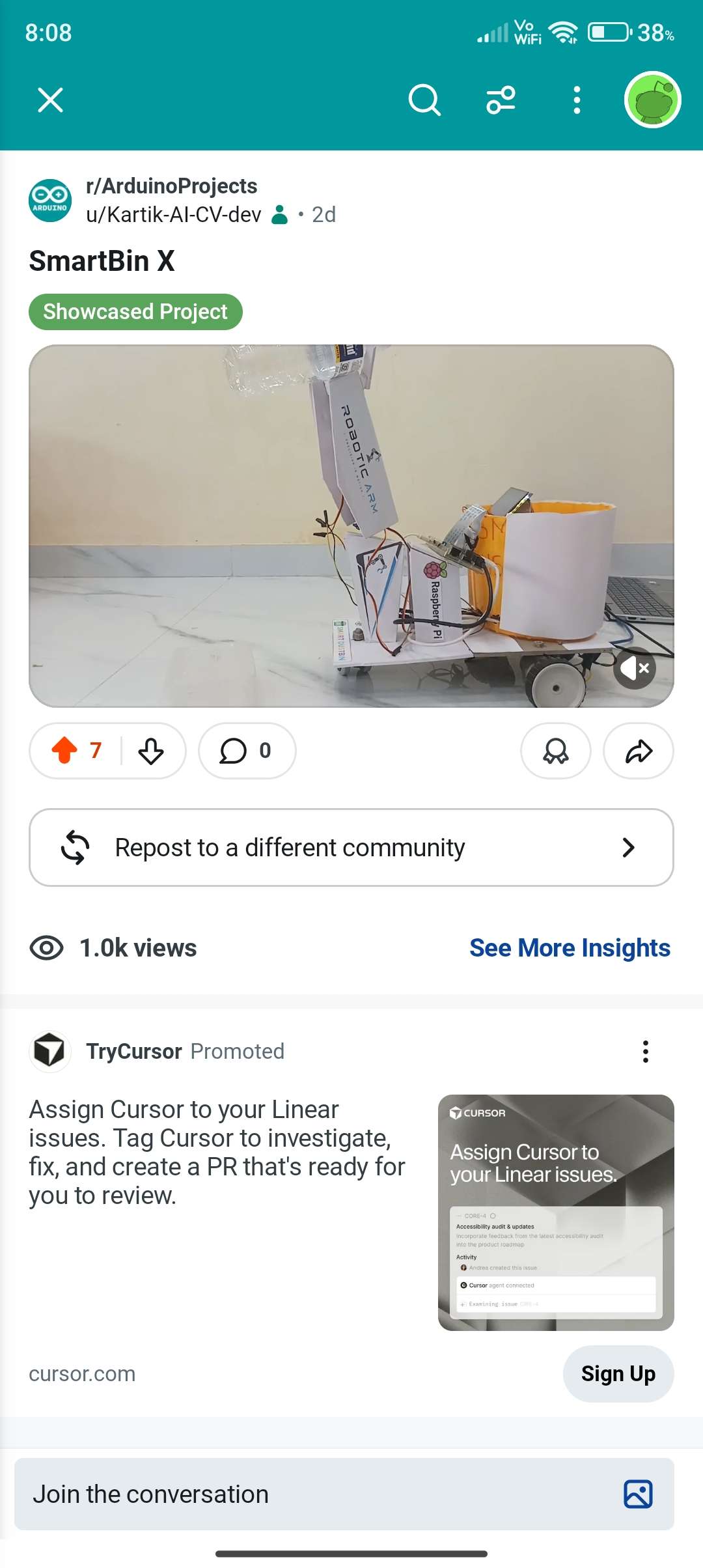
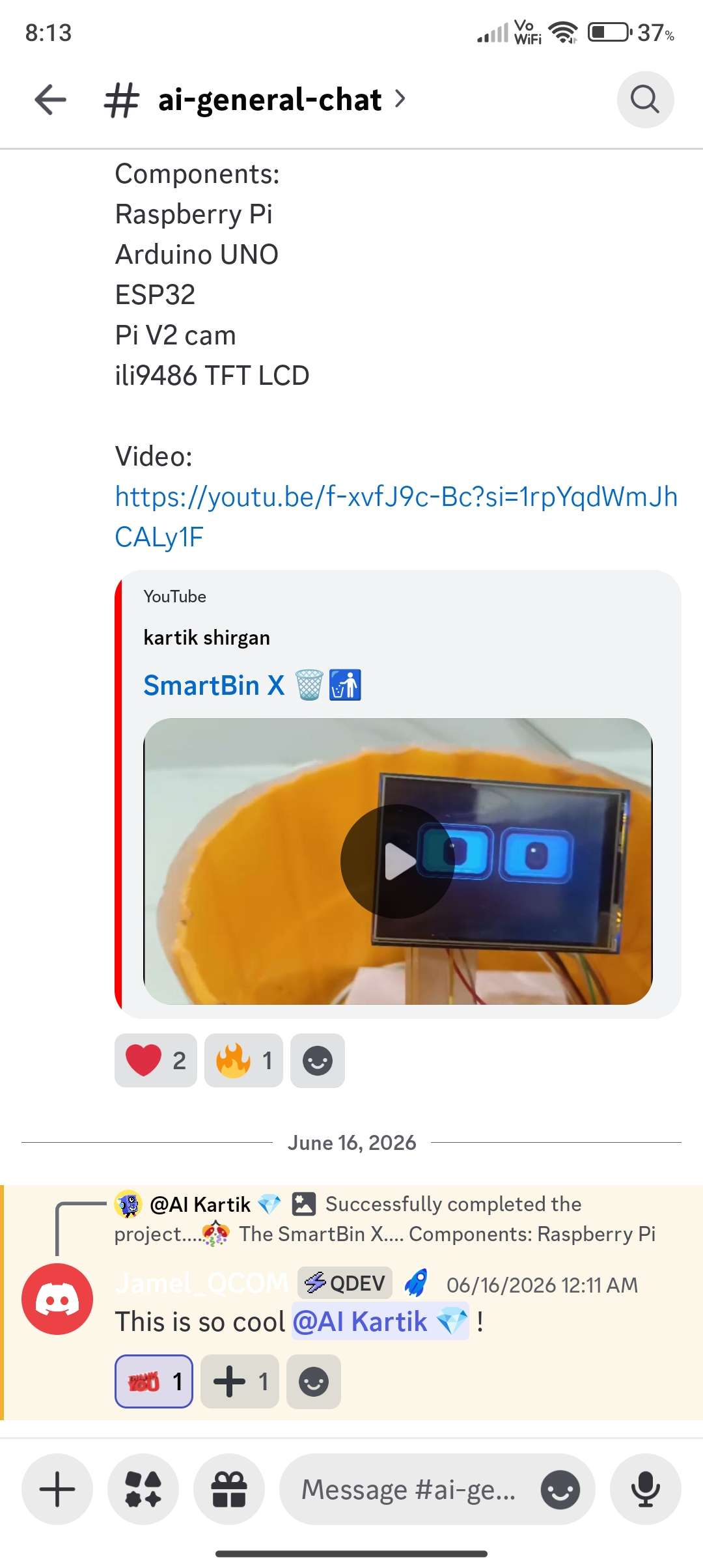
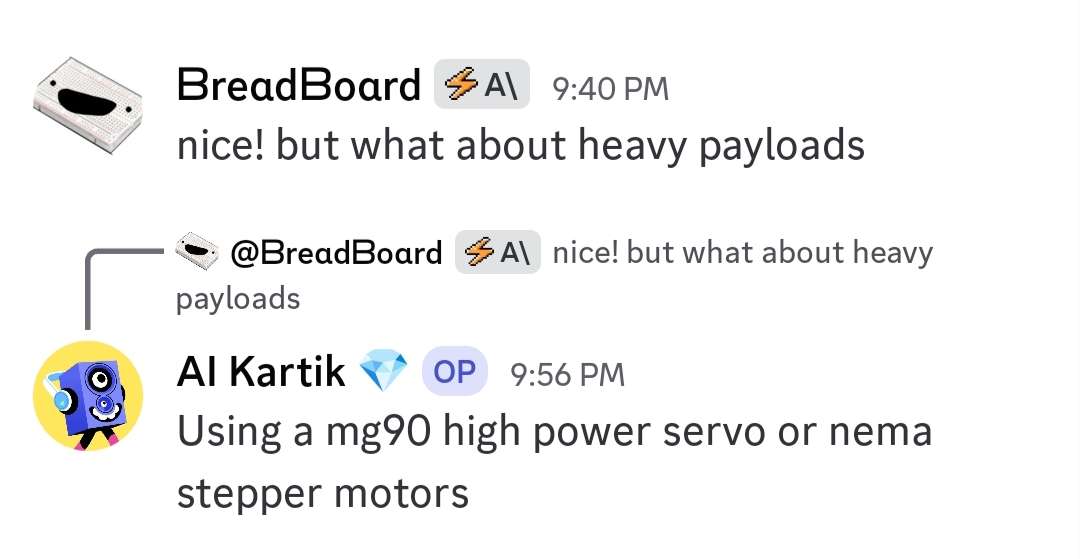
Question asked......
.jpeg)


