



Problem Statement
During disasters, military operations, trekking expeditions, or remote-area missions, conventional communication systems may fail due to:
- No cellular coverage
- Internet outages
- Infrastructure damage
- Power failures
Teams require a lightweight, reliable, and low-power method to instantly transmit emergency alerts.
Introduction
Rakshak Net V3 is an infrastructure-free emergency communication system developed using ESP32 microcontrollers and the ESP-NOW wireless communication protocol. The system is designed to provide instant emergency alert transmission between team members in environments where traditional communication networks may be unavailable or unreliable.
Unlike conventional communication systems that depend on cellular networks, internet connectivity, routers, or cloud services, Rakshak Net operates completely offline through direct peer-to-peer communication.
The current version demonstrates reliable bidirectional communication between two independent nodes, making it suitable for disaster response teams, military personnel, rescue workers, trekkers, and individuals operating in remote areas.
Components Used
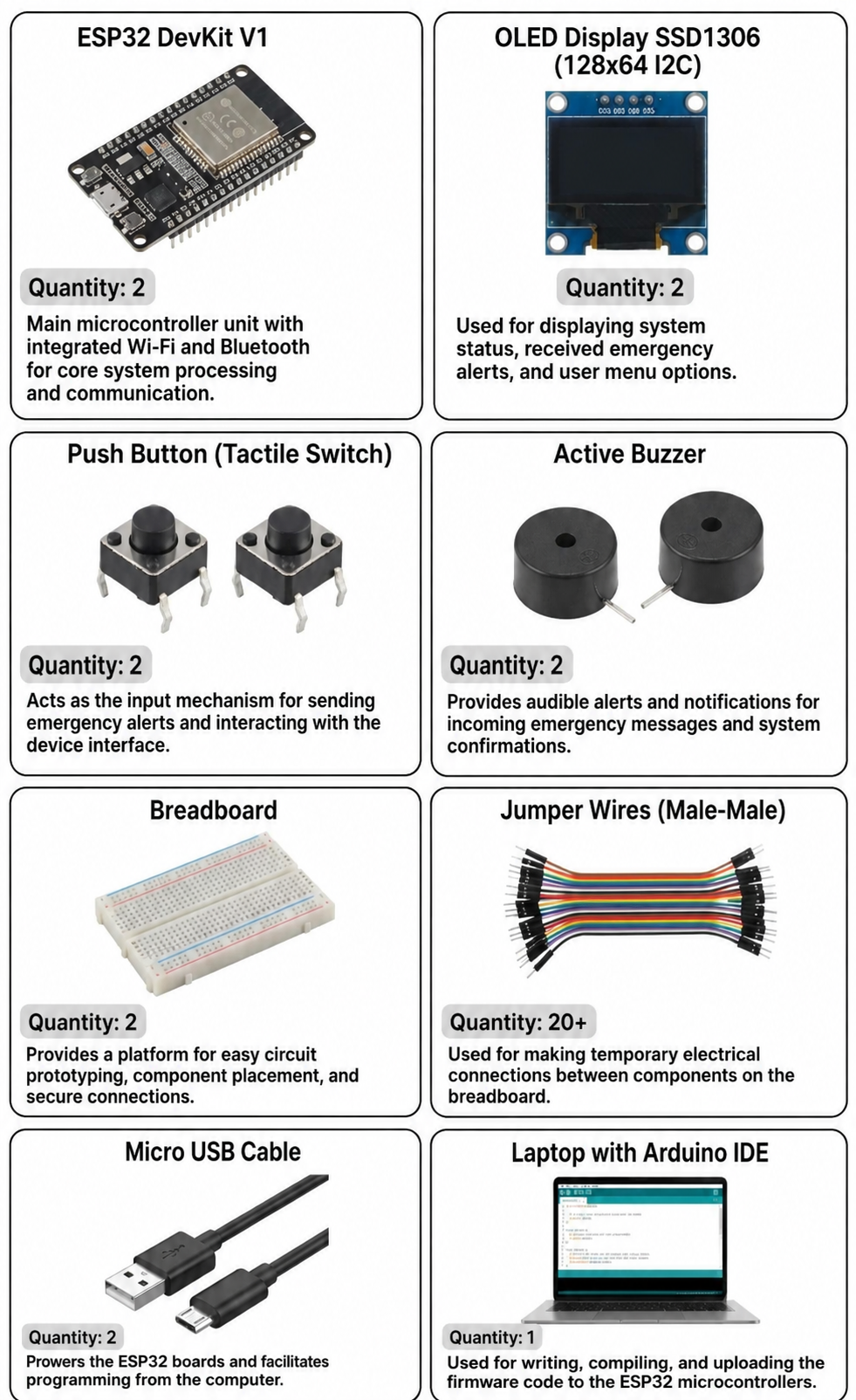
Hardware Components
ESP32 DevKit V1 × 2
SSD1306 OLED Display (128×64) × 2
Push Button × 2
Active Buzzer × 2
Breadboard × 2
Jumper Wires
USB Power Source
Software Tools
Arduino IDE
ESP32 Board Package
Adafruit SSD1306 Library
Adafruit GFX Library
ESP-NOW Protocol
Working Principle
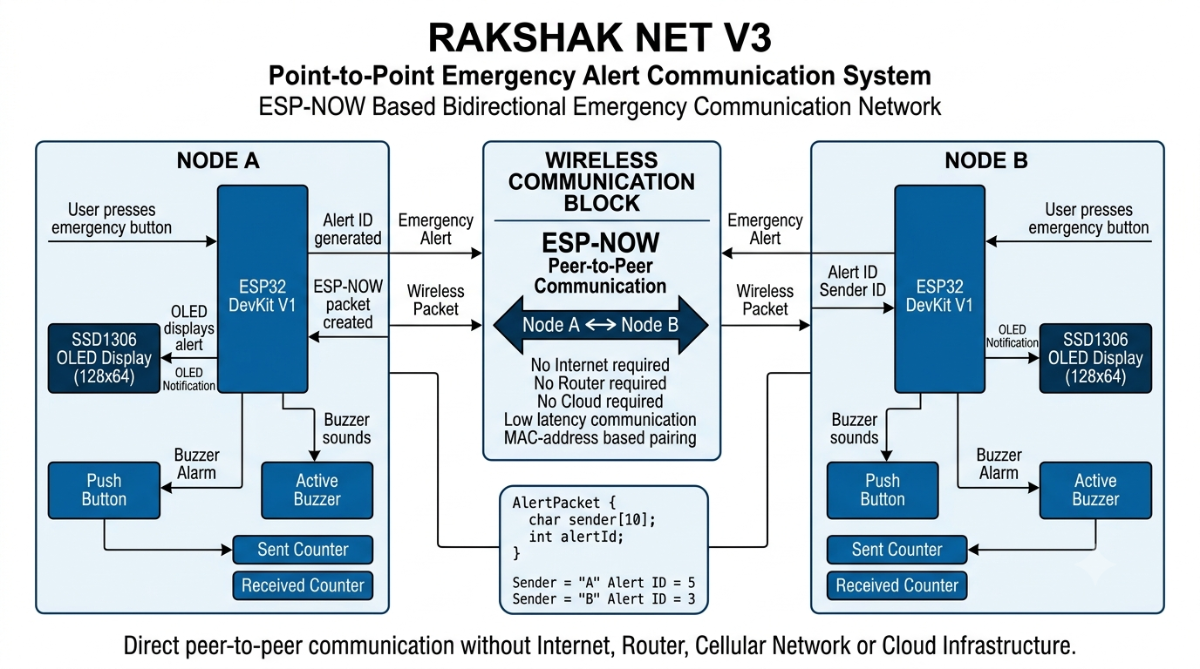
Rakshak Net consists of two communication nodes:
Node A
- ESP32 Controller
- OLED Display
- Emergency Button
- Buzzer
Node B
- ESP32 Controller
- OLED Display
- Emergency Button
- Buzzer
Both nodes are paired using their unique MAC addresses and communicate directly through ESP-NOW.
When an emergency button is pressed on any node:
- A unique Alert ID is generated.
- An alert packet containing sender information and alert ID is created.
- The packet is transmitted wirelessly using ESP-NOW.
- The receiving node instantly receives the alert.
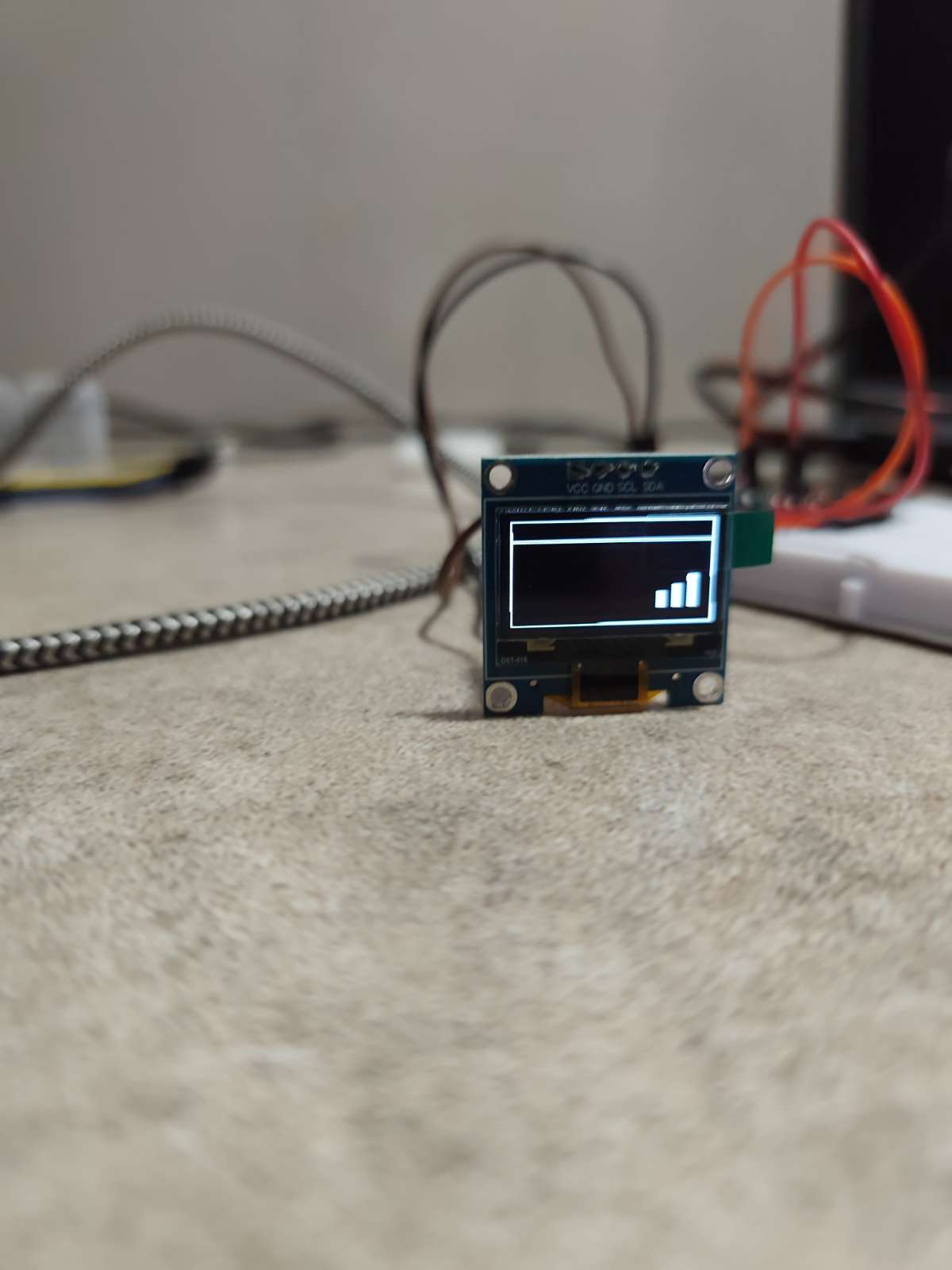
- Alert details are displayed on the OLED screen.
- The buzzer activates to notify the user.
- Sent and received alert counters are updated.
- The communication process works in both directions: Node A ↔ Node B allowing any node to initiate an emergency alert.
Project Implementation
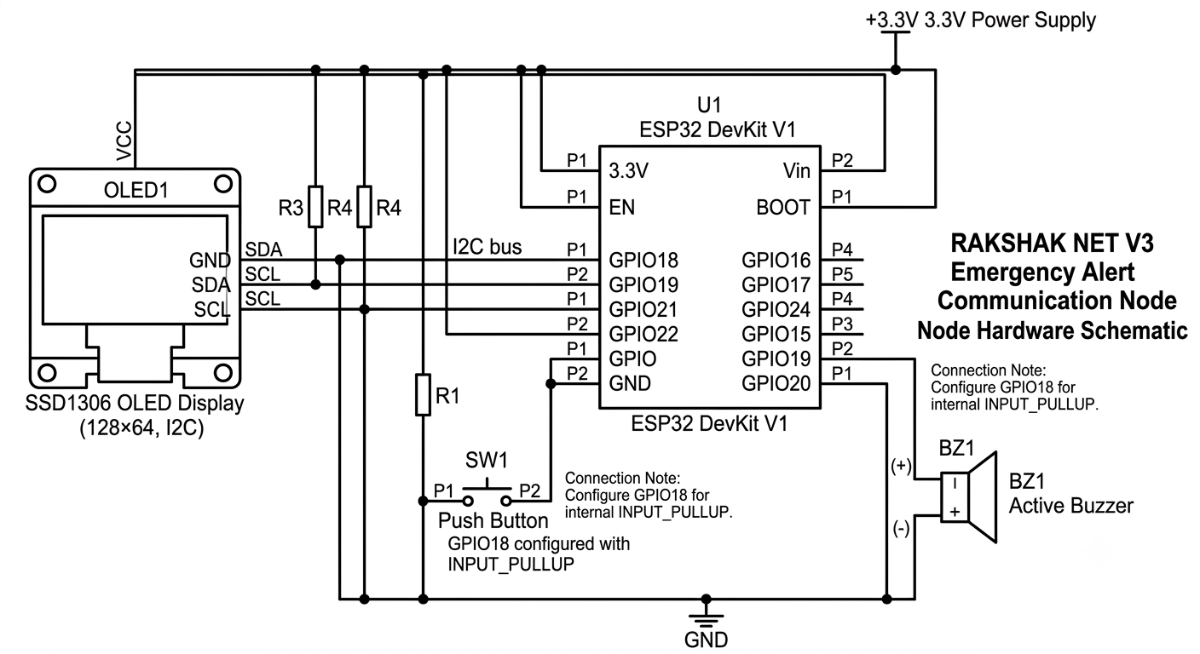
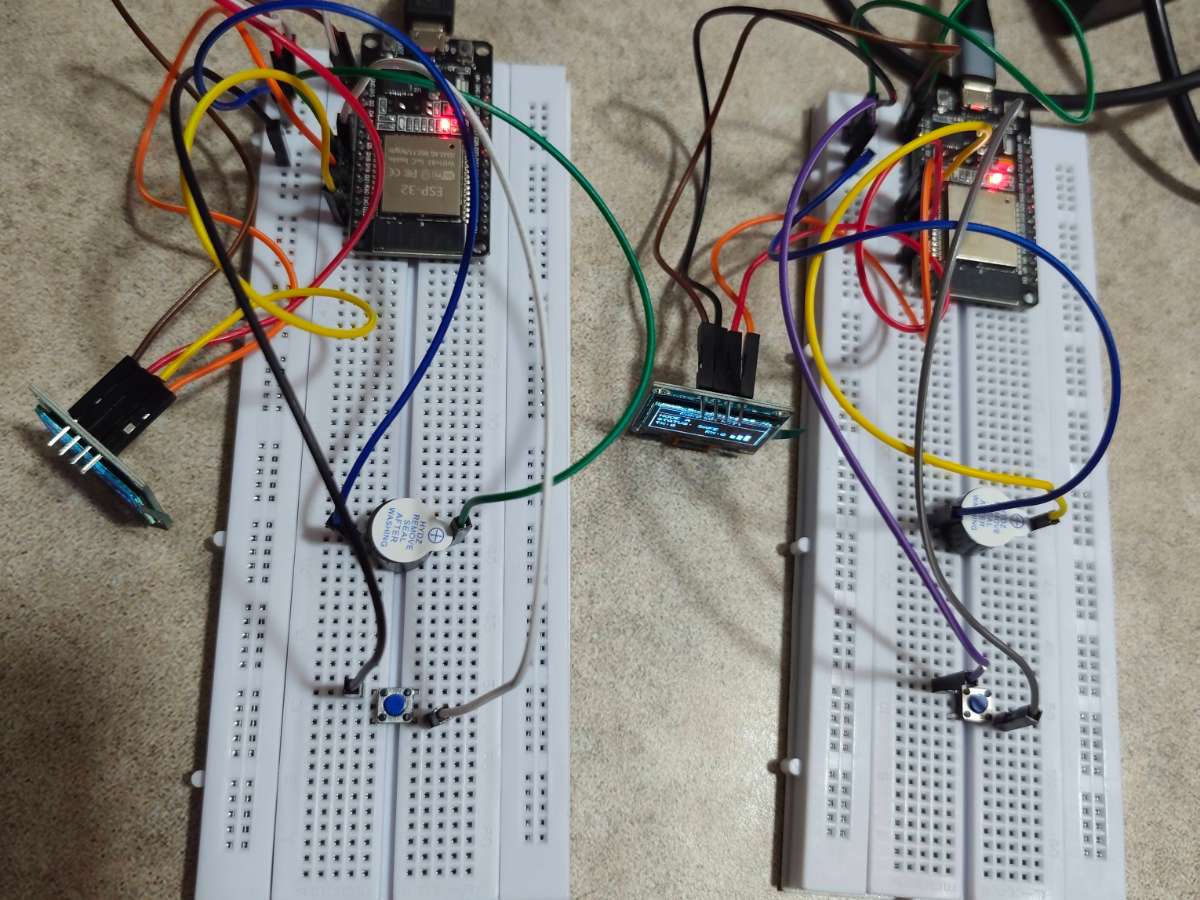
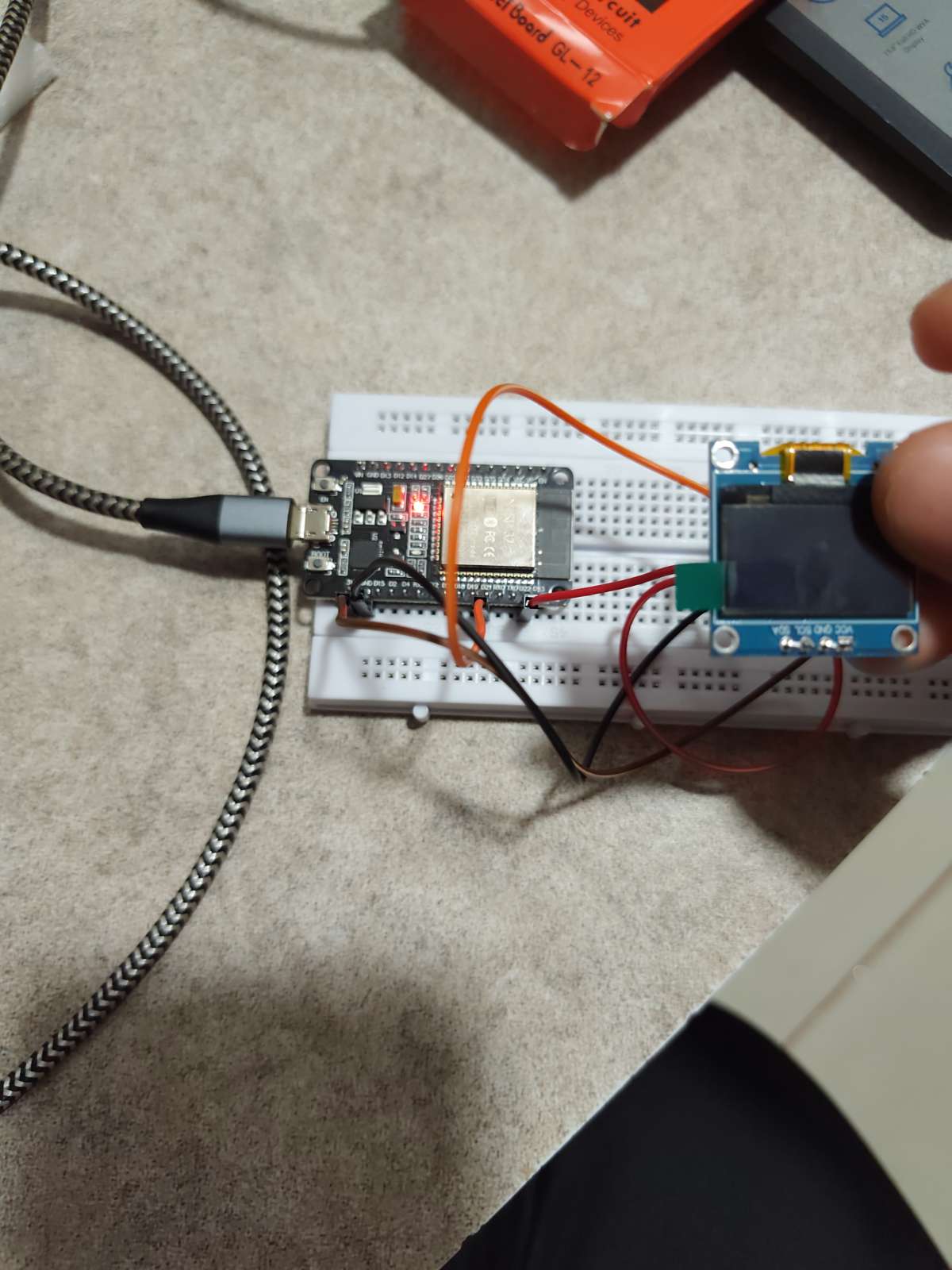
Step 1 – Hardware Assembly
Both communication nodes were assembled using ESP32 development boards, OLED displays, push buttons, and active buzzers.
Step 2 – ESP-NOW Configuration
The MAC address of each ESP32 was obtained using a simple MAC address finder sketch. These MAC addresses were then used to establish peer-to-peer communication between both nodes.
Step 3 – User Interface Development
An OLED-based user interface was developed to display:
- Node Identification
- System Status
- Sent Alert Count
- Received Alert Count
- Alert Information
Step 4 – Alert Transmission
When a user presses the emergency button:
- Alert ID is generated
- Alert packet is created
- ESP-NOW transmits the packet
- Sender OLED displays transmission confirmation
Step 5 – Alert Reception
Upon receiving an alert:
- OLED displays sender information
- Alert ID is shown
- Buzzer activates
- Received counter is updated
Results
The developed prototype successfully demonstrated:
- Bidirectional Communication
- Real-Time Emergency Alert Transmission
- Offline Peer-to-Peer Communication
- OLED-Based Alert Visualization
- Audible Alarm Generation
- Unique Alert ID Tracking
- Sent and Received Alert Monitoring
- Infrastructure-Free Operation
Testing
Test 1 – Node A → Node B Alert
- Emergency button pressed on Node A.
- Alert packet transmitted successfully.
- Node B displayed alert notification.
- Buzzer activated.
- Received counter updated.
Test 2 – Node B → Node A Alert
- Emergency button pressed on Node B.
- Alert packet transmitted successfully.
- Node A displayed alert notification.
- Buzzer activated.
- Received counter updated.
Test 3 – Offline Operation
Both nodes operated without:
- Internet
- Router
- Cellular Network
- Cloud Server
Result: Successful.
Images
.jpg)
.jpg)
Applications
Defense and Security
- Soldier emergency signaling
- Border patrol communication
- Tactical field operations
Disaster Management
- Flood rescue teams
- Earthquake response units
- Emergency coordination teams
Adventure and Exploration
- Trekking groups
- Mountain expeditions
- Forest exploration teams
Industrial Safety
- Mining operations
- Oil and gas facilities
- Remote construction sites
Advantages
- No Internet Required
- No Cellular Network Required
- No Router Required
- Low Power Consumption
- Fast Alert Transmission
- Easy Deployment
- Cost Effective
- Portable Design
- Reliable Emergency Communication
Future Scope
The next version, Rakshak Net Mesh V4, will introduce:
- Multi-Node Mesh Networking
- Alert Relay Mechanism
- Node A ↔ Node B ↔ Node C Communication
- GPS Integration
- Alert Acknowledgements
- Battery Monitoring
- Mobile Dashboard
Long-Range Communication Support
This enhancement will transform Rakshak Net from a point-to-point communication system into a scalable decentralized emergency communication network.
Conclusion
Rakshak Net V3 successfully demonstrates a practical and reliable emergency communication system capable of operating entirely without external communication infrastructure. By leveraging ESP32 and ESP-NOW technology, the system enables instant bidirectional emergency alert transmission with visual and audible notifications. The project establishes a strong foundation for future mesh-based emergency communication networks and highlights the potential of low-cost embedded systems in critical communication scenarios.


