



How CocoGuard Was Built
Step 1: Designing the Concept
The first step was understanding the problem of hidden pest attacks inside coconut trees. Since early damage cannot be identified visually, an acoustic-based monitoring approach was selected.
The idea was to capture internal sounds produced by beetle activity and analyze them using an embedded system.
.png)
Step 2: Selecting the Hardware Components
The main components were selected based on low power operation and outdoor deployment requirements.
The system consists of:
- ESP32 development board for processing and wireless communication
- INMP441 MEMS microphone for capturing acoustic signals
- Solar panel and battery for independent power supply
- Buzzer for indication alerts
- Protective enclosure for field installation
.png)
.png)
Step 3: Circuit Assembly
The ESP32 was connected with the MEMS microphone module to collect digital audio signals.
Power management components were connected with the battery and solar panel to enable continuous operation.
.png)
Step 4: Developing the Firmware
The ESP32 firmware was developed using Arduino IDE.
The program performs:
- Initializing the microphone interface
- Reading acoustic signals
- Processing sensor data
- Detecting abnormal activity patterns
- Sending monitoring data wirelessly
Step 5: Signal Processing
The captured acoustic signals are processed to identify frequency patterns related to beetle activity and detect infestation events.
Flow:
Sensor Input → Signal Processing → Pattern Detection → Alert Generation
A Firebase-based web dashboard is developed for real-time monitoring. It displays live alerts, signal activity graphs, and stores detection history with event count and timestamps for analysis.
.png)
Step 6: Enclosure and Hardware Integration
After testing the electronics, all components were placed inside a protective enclosure.
The enclosure was designed to:
- Protect electronics from outdoor conditions
- Allow sensor placement near the tree surface
Support easy installation
.png)
Step 7: Field Installation
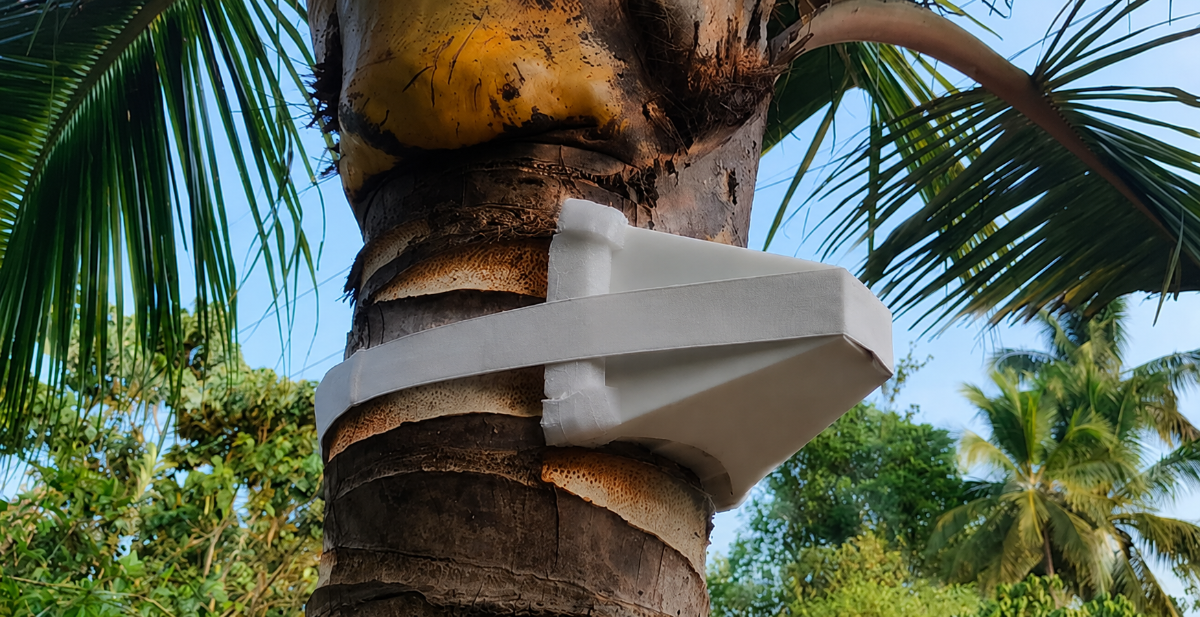
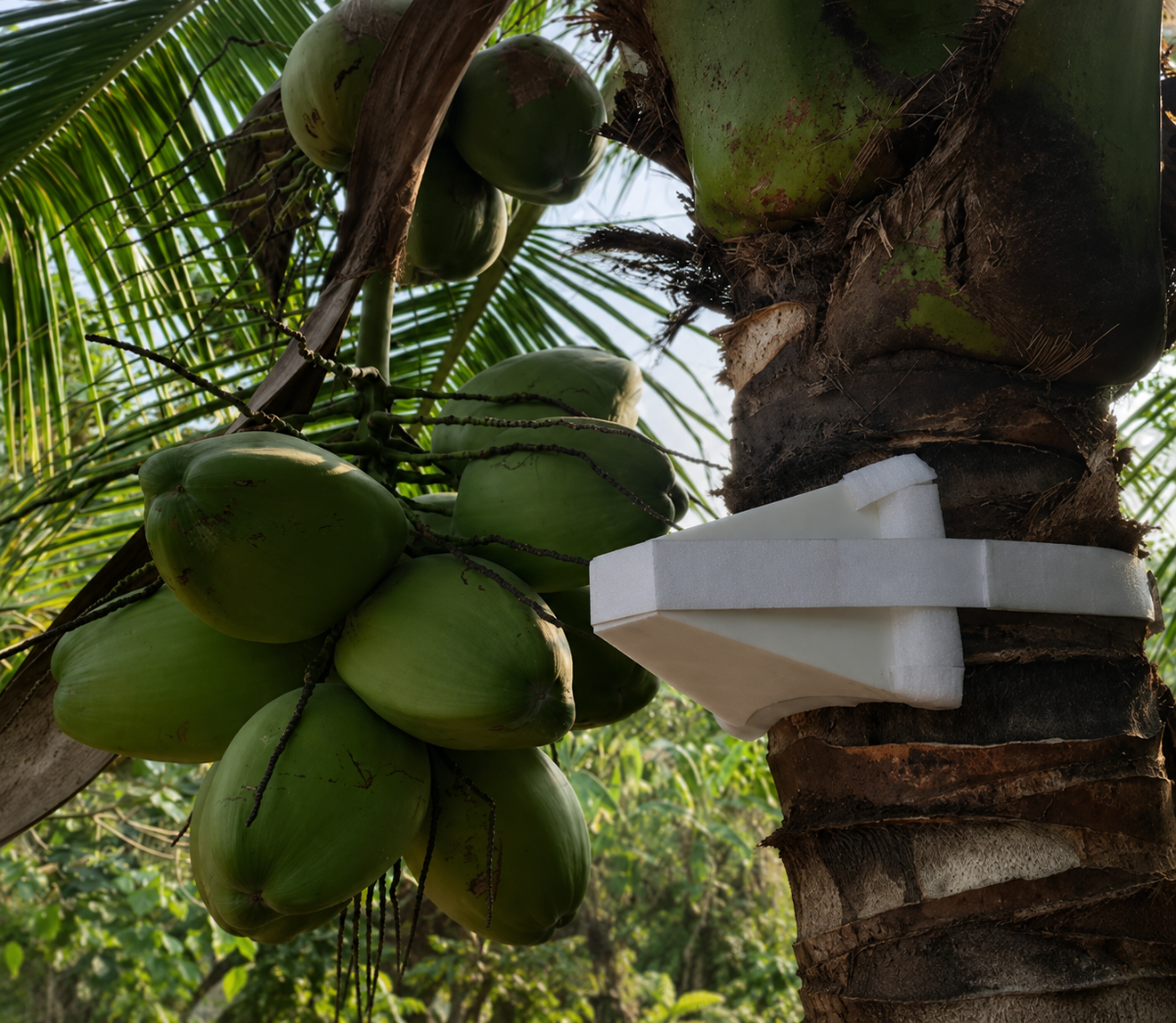
The completed CocoGuard device was mounted on a coconut tree.
The solar panel provides power, while the sensor continuously monitors acoustic activity.
.png)
Step 8: Testing and Validation
The prototype was tested by checking:
- Sensor data collection
- ESP32 processing
- Wireless communication
- Power management
Final Outcome
CocoGuard demonstrates a low-power smart monitoring system capable of collecting acoustic information from coconut trees and providing an approach for early pest detection.


