




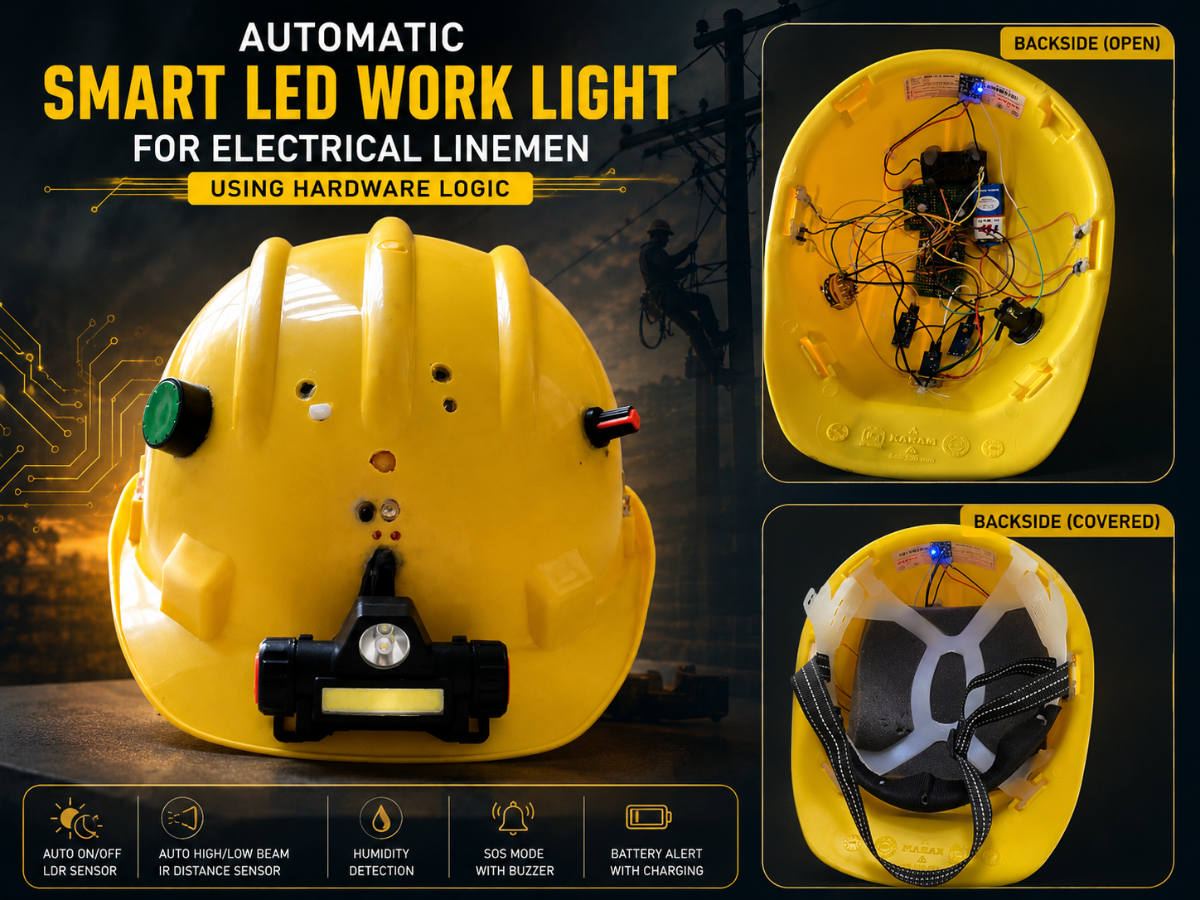
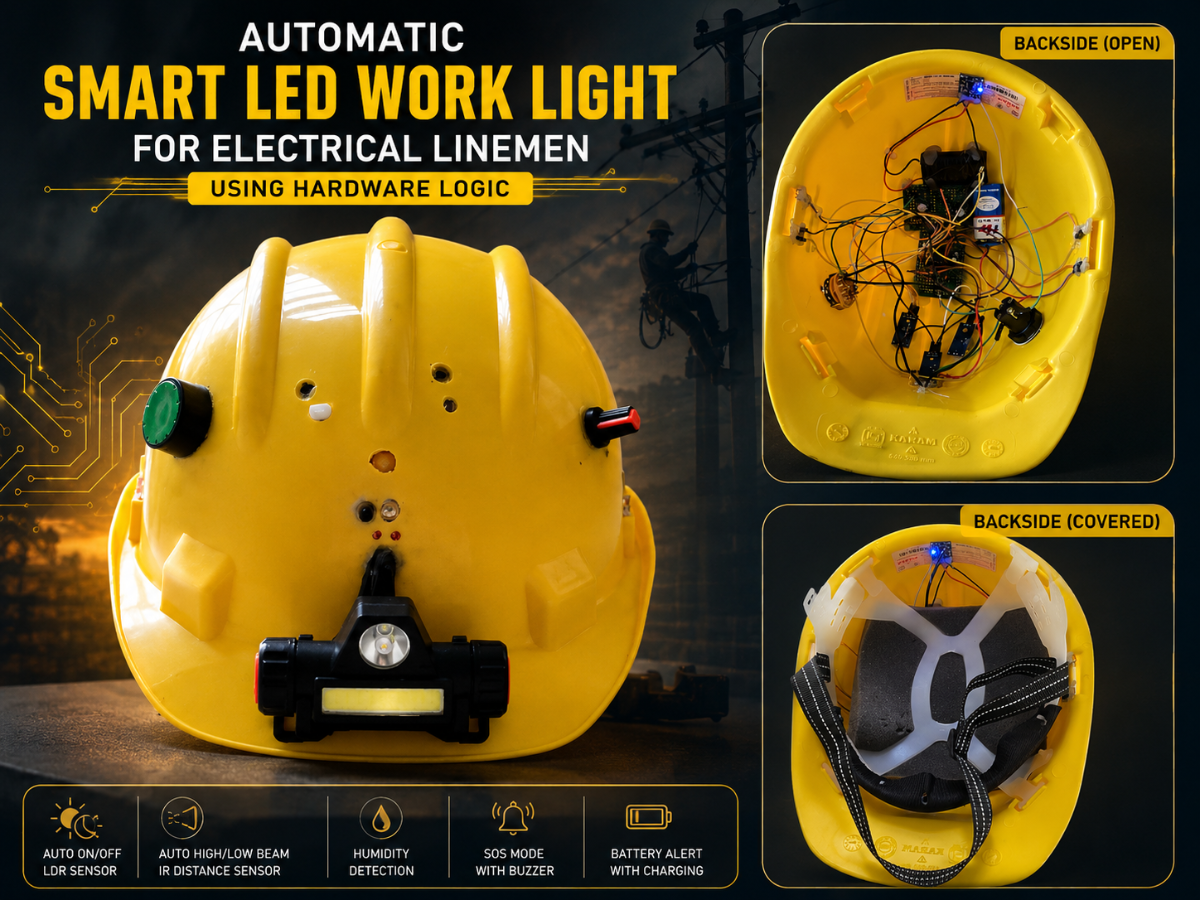
Automatic Smart LED Work Light for Electrical Linemen Using Hardware Logic
Introduction
Electrical linemen often work at night, during power outages, and in hazardous environments where proper illumination is essential for safe and efficient maintenance. Conventional helmet lights or handheld torches require manual operation and fixed beam intensity, forcing workers to constantly adjust lighting while performing critical tasks.
To address these challenges, we designed a completely hardware-based Smart LED Work Light that automatically switches ON in darkness, adjusts between high and low beam depending on the working distance, detects high humidity, provides an independent emergency SOS system, and monitors battery status—all without using any microcontroller.
Since the entire system operates using sensors, analog electronics, and digital logic gates, it offers fast response, low power consumption, improved reliability, and eliminates firmware-related failures.
Features
- Automatic ON/OFF using LDR
- Automatic High Beam / Low Beam Switching
- Hardware Logic (No Microcontroller)
- Smooth Fade-In / Fade-Out
- Humidity Warning LED
- Independent SOS Emergency System (Always Active in All Modes)
- Separate Emergency Battery
- Battery Charging using TP4056
- Manual Rotary Switch for OFF / ON / AUTO Modes
- Emergency System Works Even When Main System is OFF
- Low Power Consumption
Rugged Helmet Integration
Working Principle
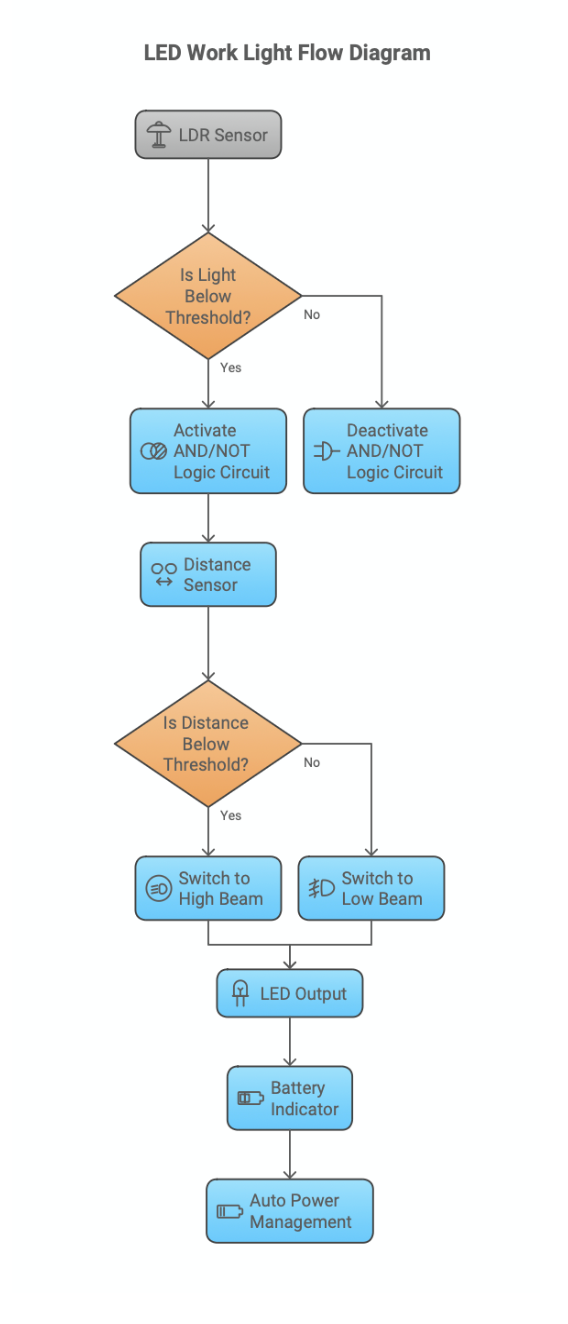
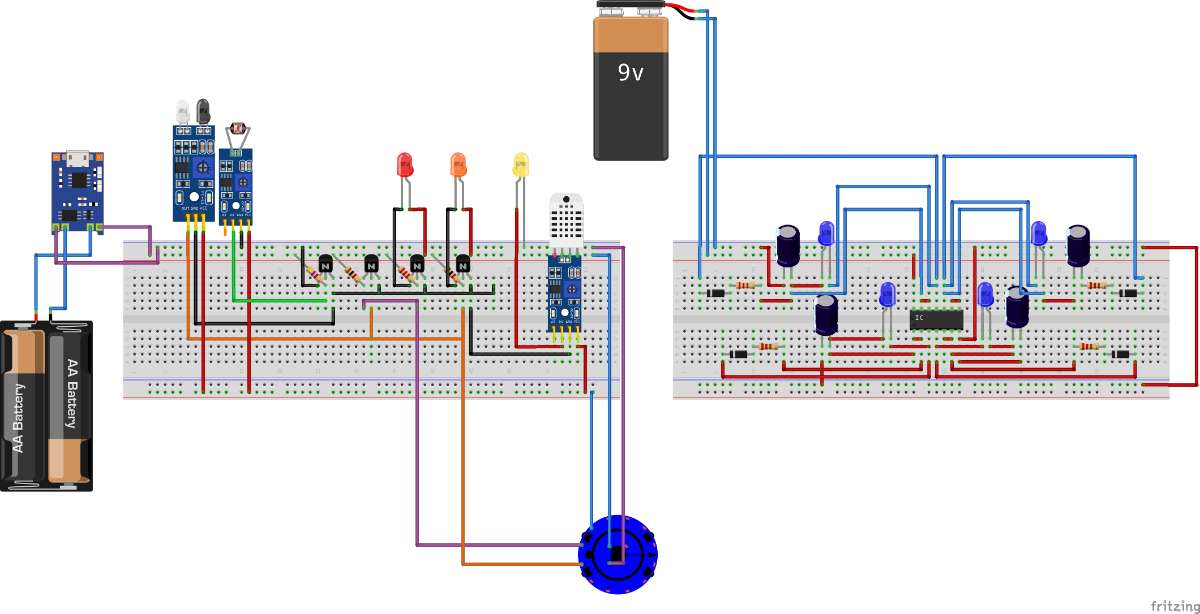
The complete system operates through hardware logic without any software programming.
During daylight, the LDR sensor disables the lighting circuit to conserve battery power.
When ambient light falls below the threshold, the LDR activates the lighting circuit and powers the IR distance sensor.
The IR sensor continuously detects the distance between the user and the working object.
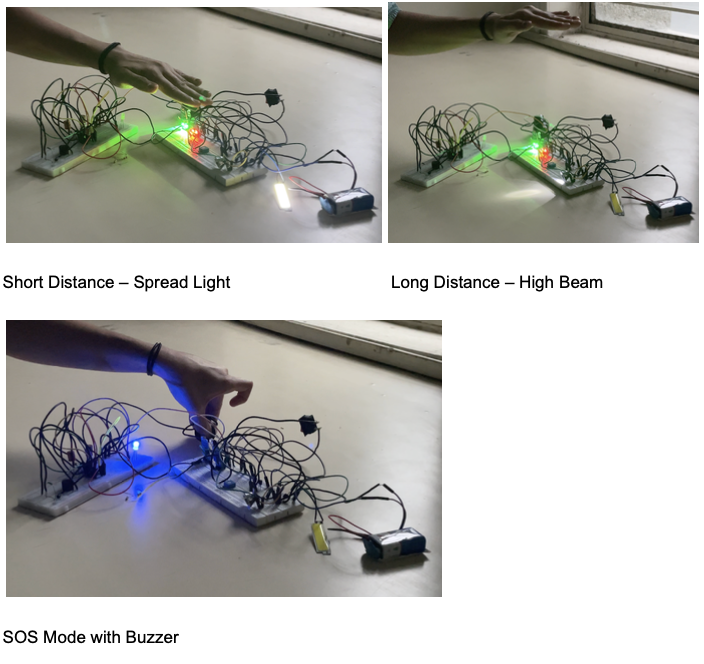
• Long distance → High Beam LED
• Short distance → Wide Flood LED
The humidity sensor monitors environmental conditions. When humidity exceeds the preset level, the amber warning LED turns ON.
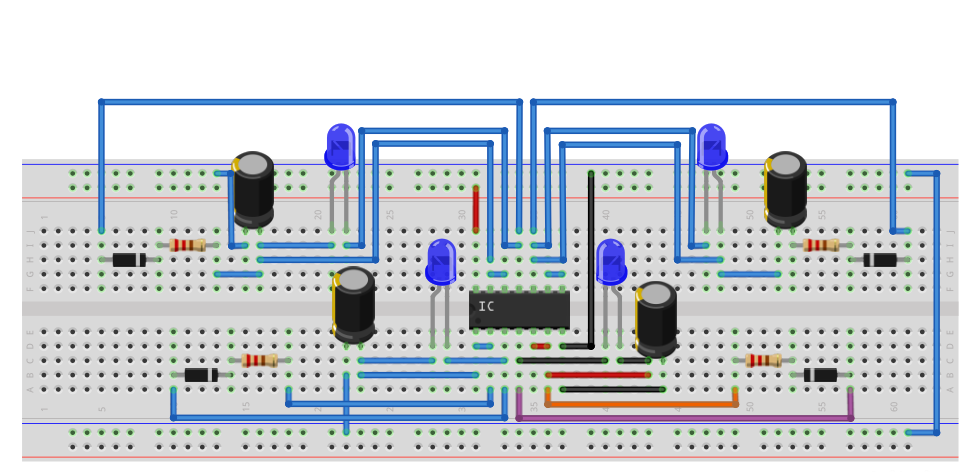
If an accident occurs, pressing the dedicated emergency push button disconnects the main lighting circuit and activates the independent SOS system powered by its own battery. The CD4093 NAND gate generates a flashing pattern while simultaneously driving the buzzer for emergency signalling.
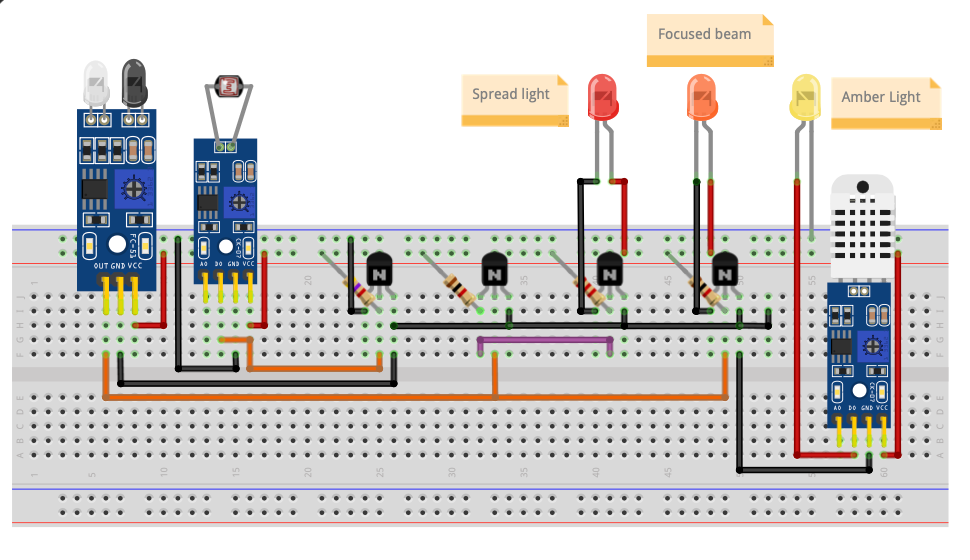
Step 1 — Collect the Required Components
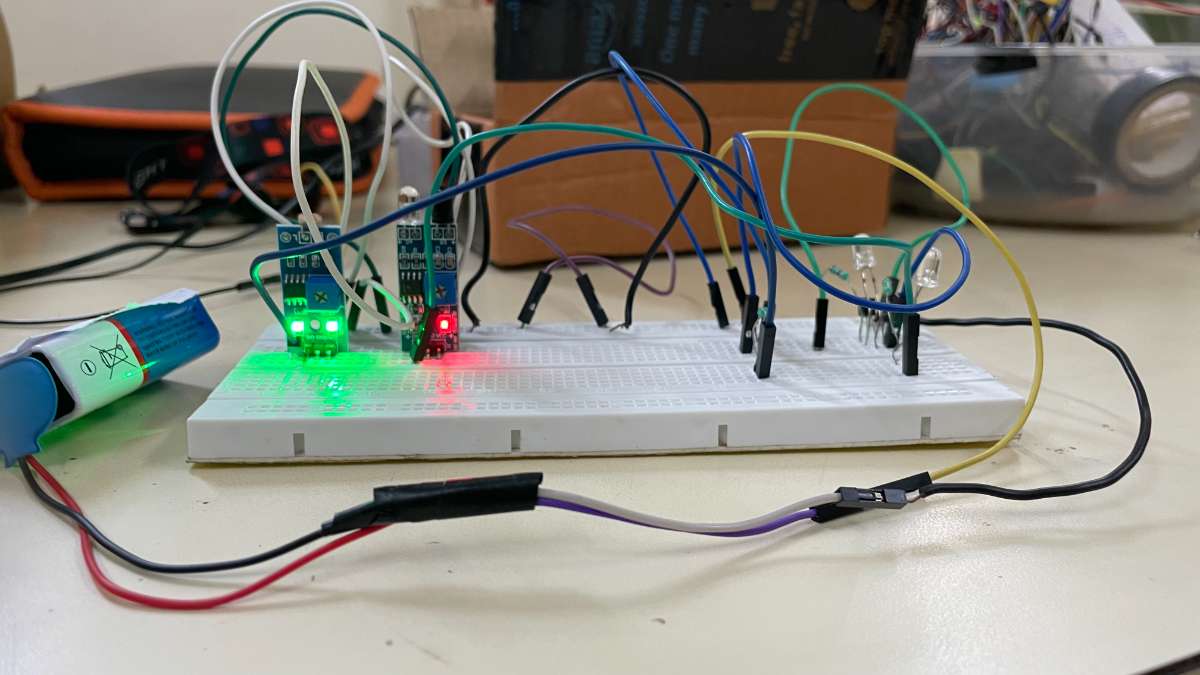
Step 2 — Building the Main Lighting Circuit
• High Beam
• Low Beam
• Fade-In Circuit
Step 3 — Designing the SOS Circuit
• 2 cm Emergency Push Button
• CD4093 NAND Gate Oscillator
• Flashing LED
• Piezo Buzzer
• Separate Emergency Battery
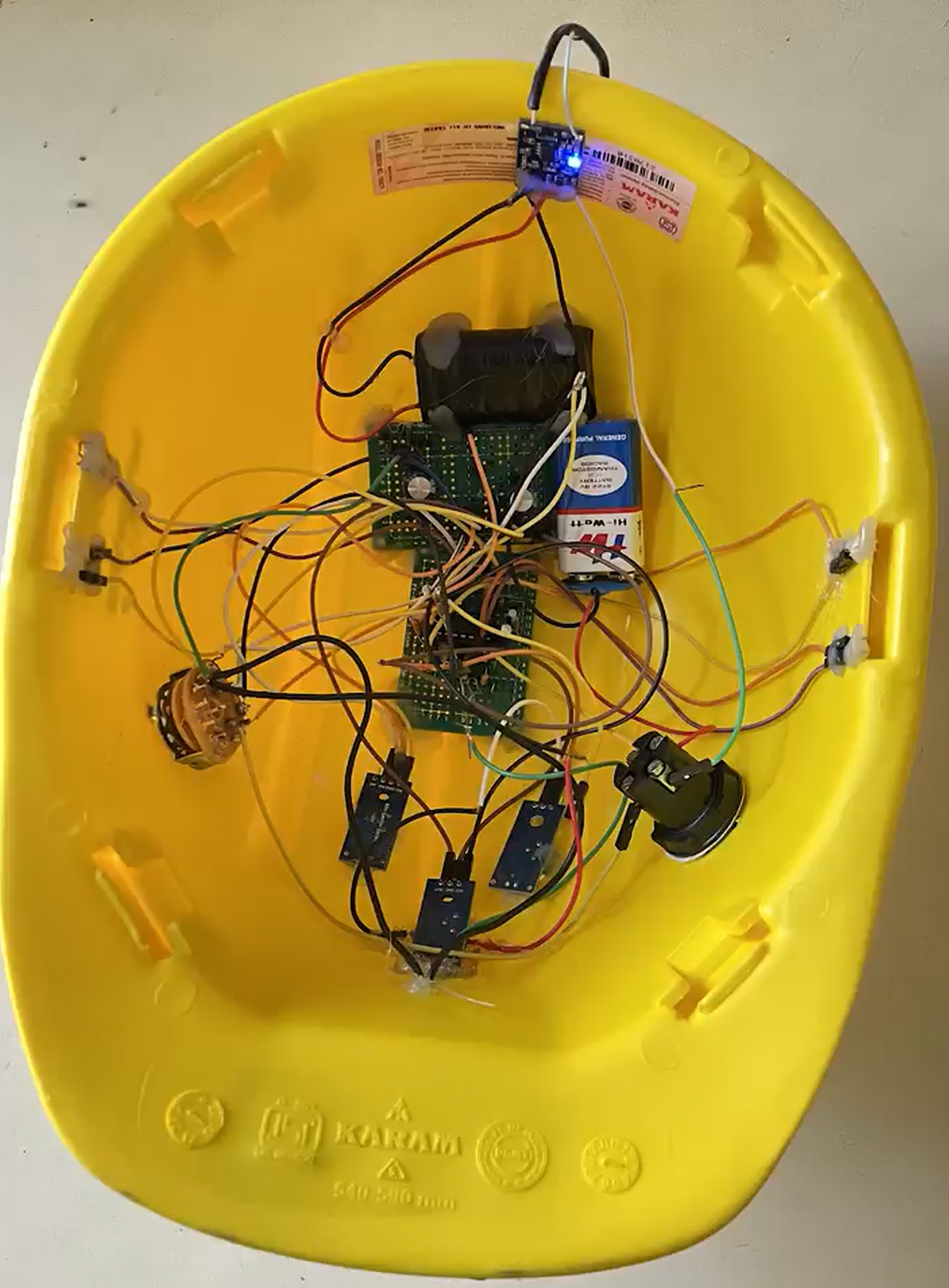
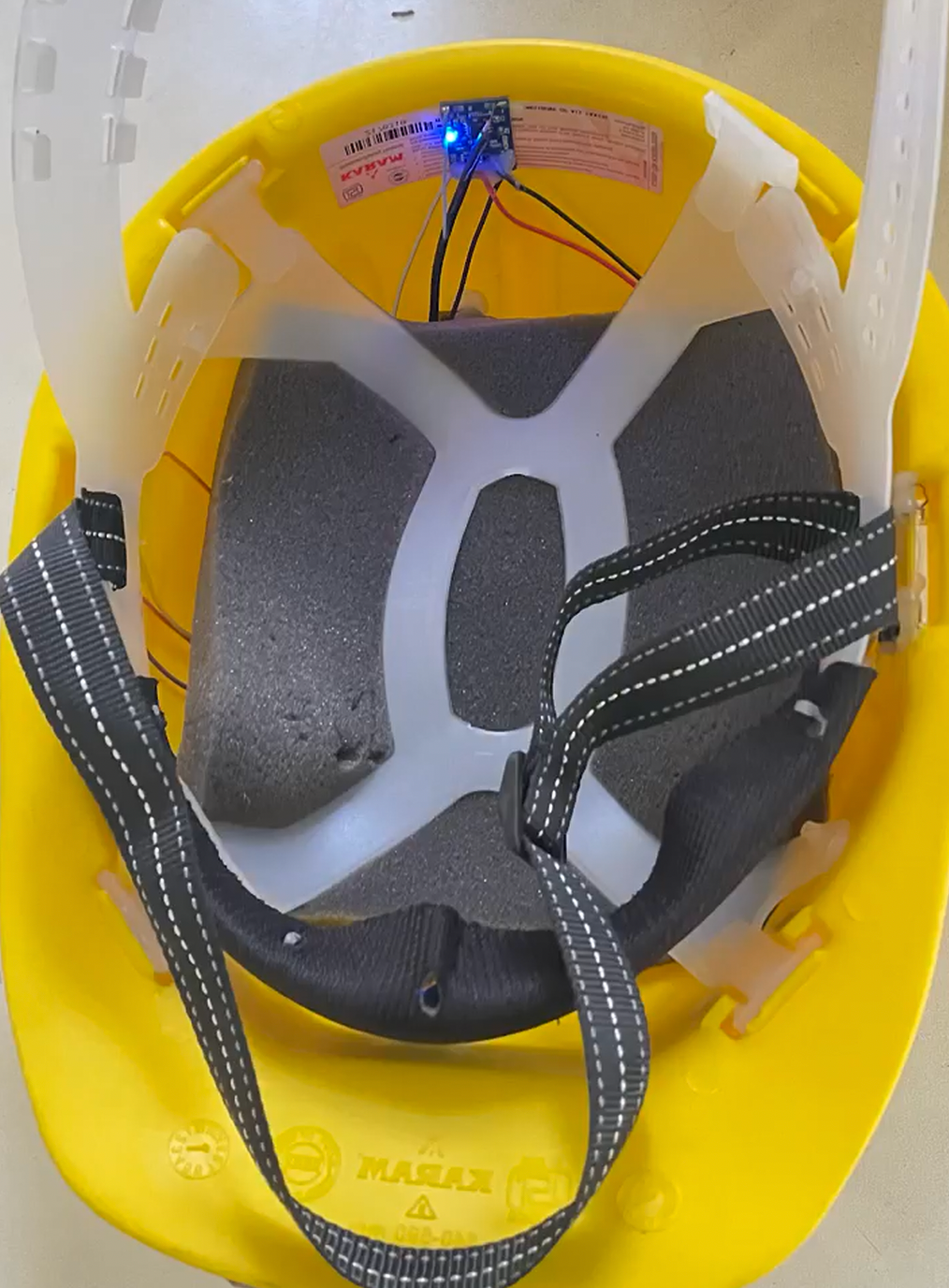
Step 4 — Helmet Assembly
Step 5 — Testing Automatic Beam Switching
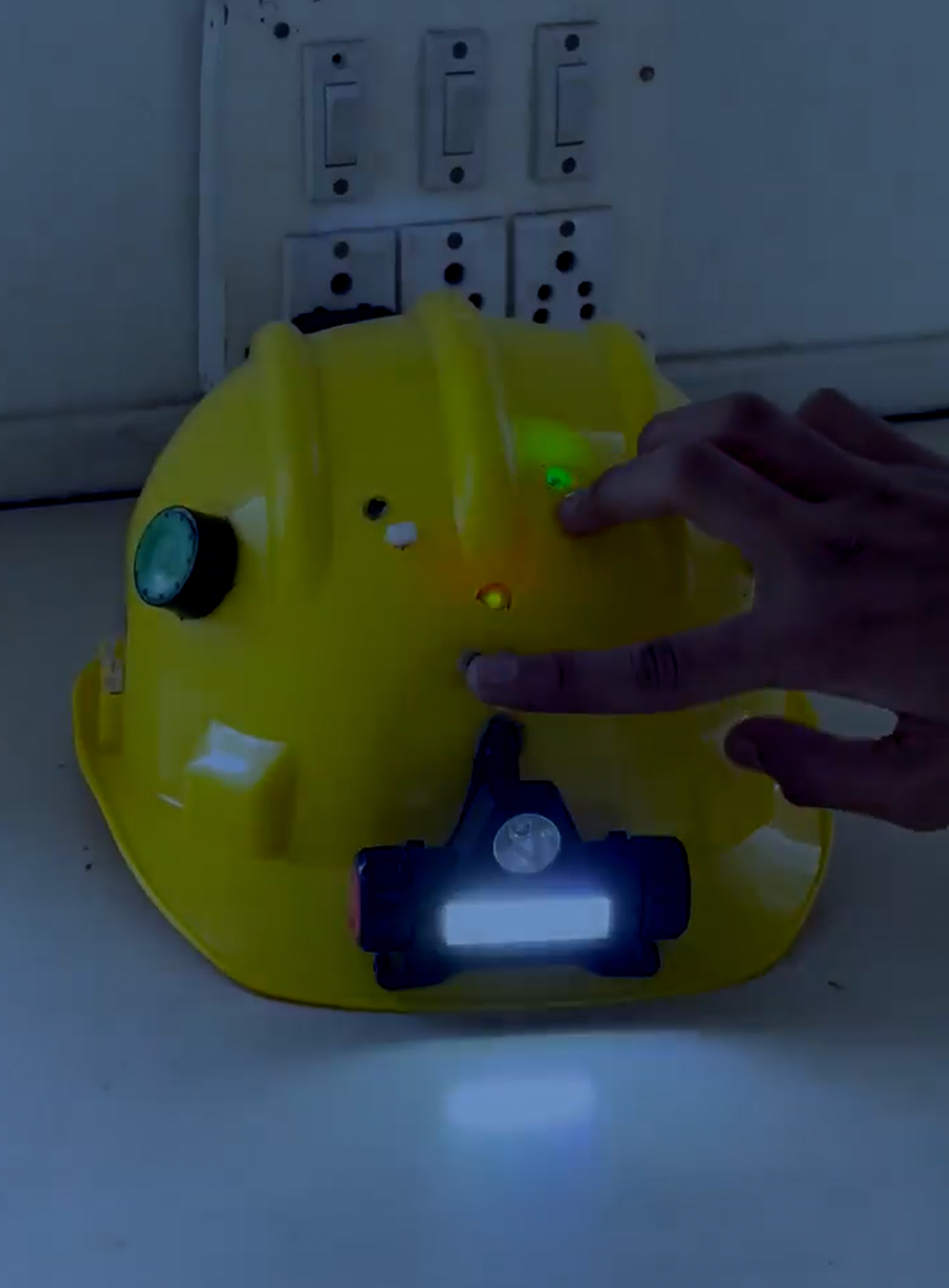
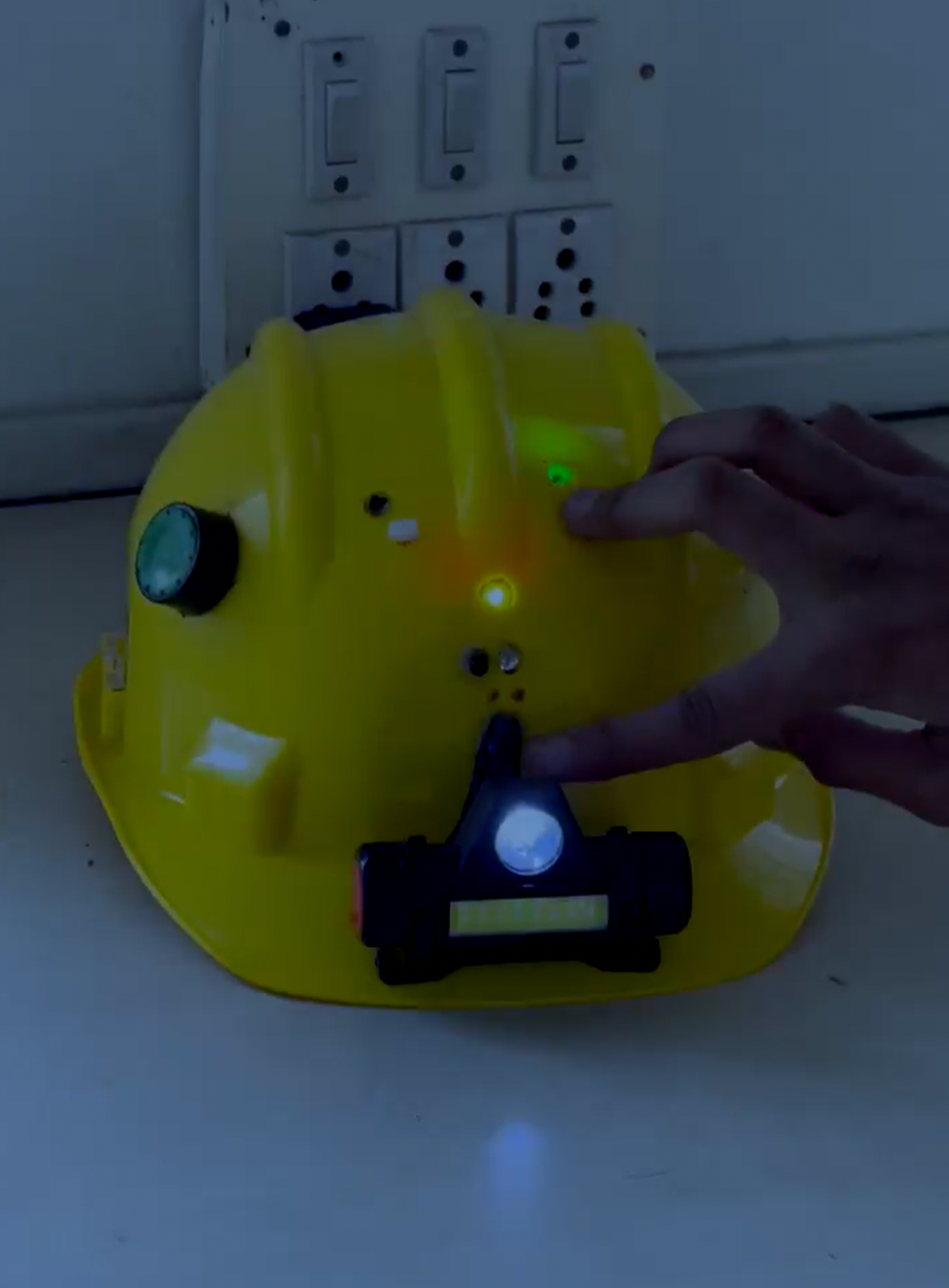
Step 6 — Testing the Humidity Warning
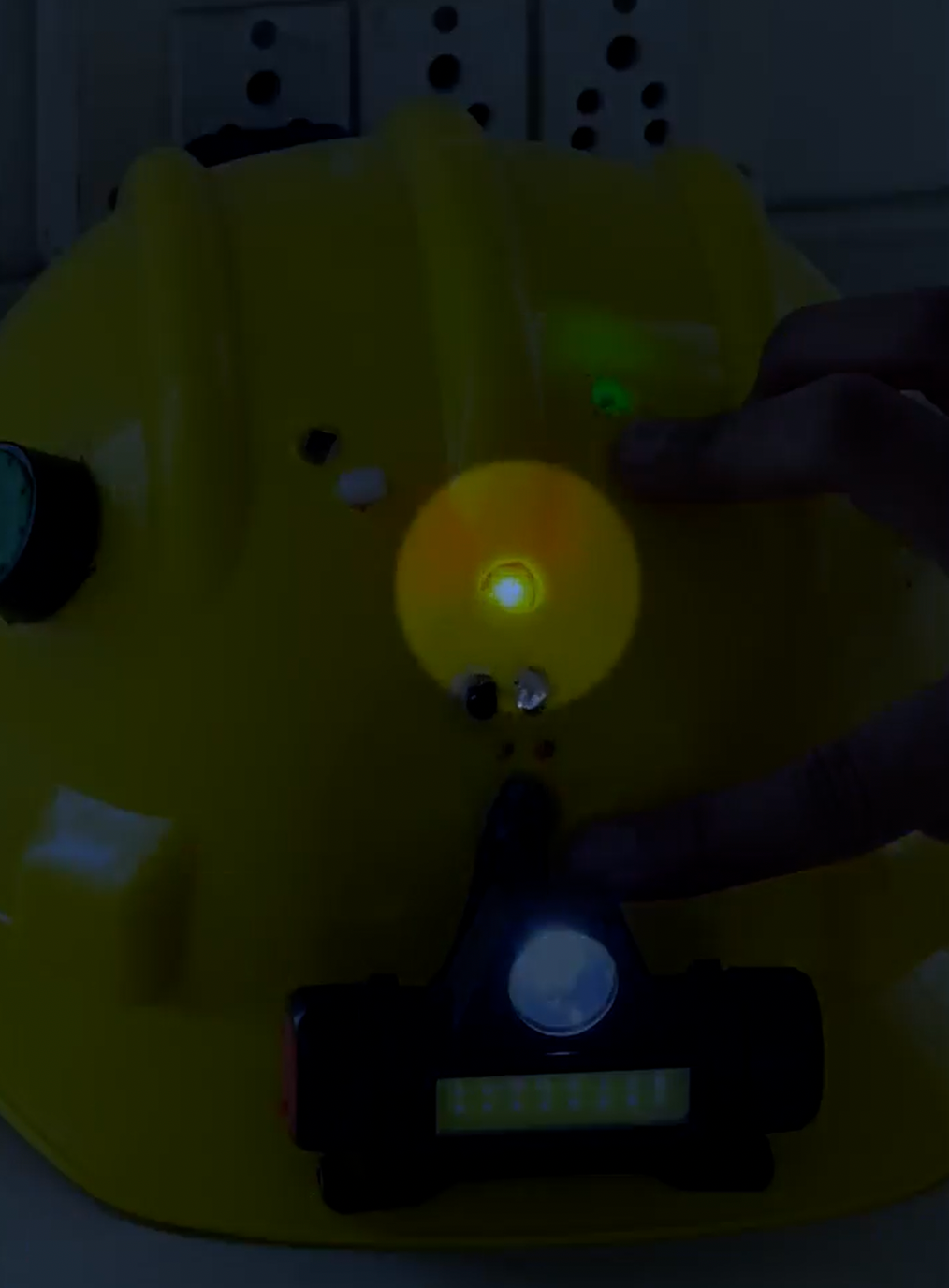
Step 7 — Testing the Emergency SOS
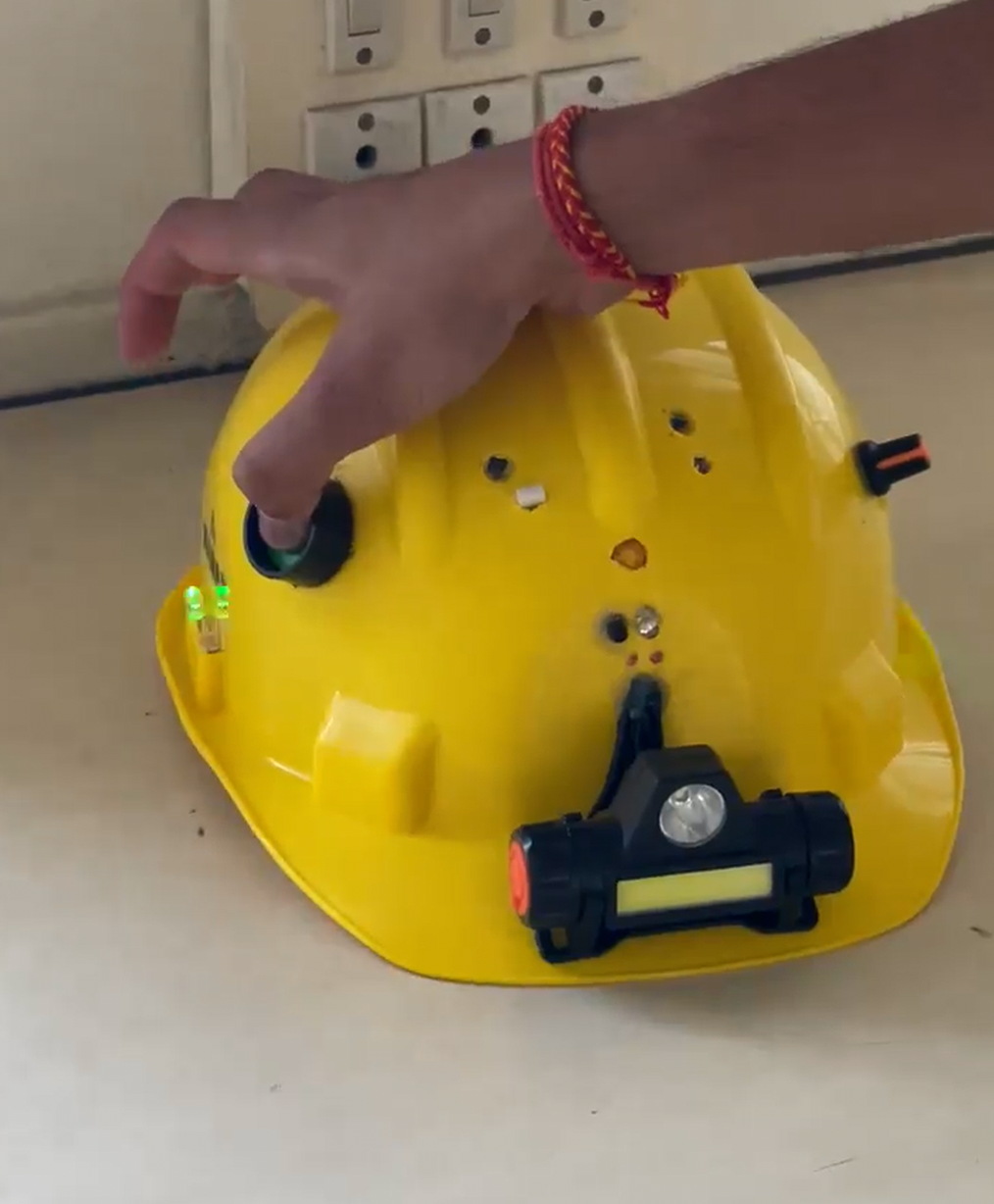
Step 8 — Final Prototype
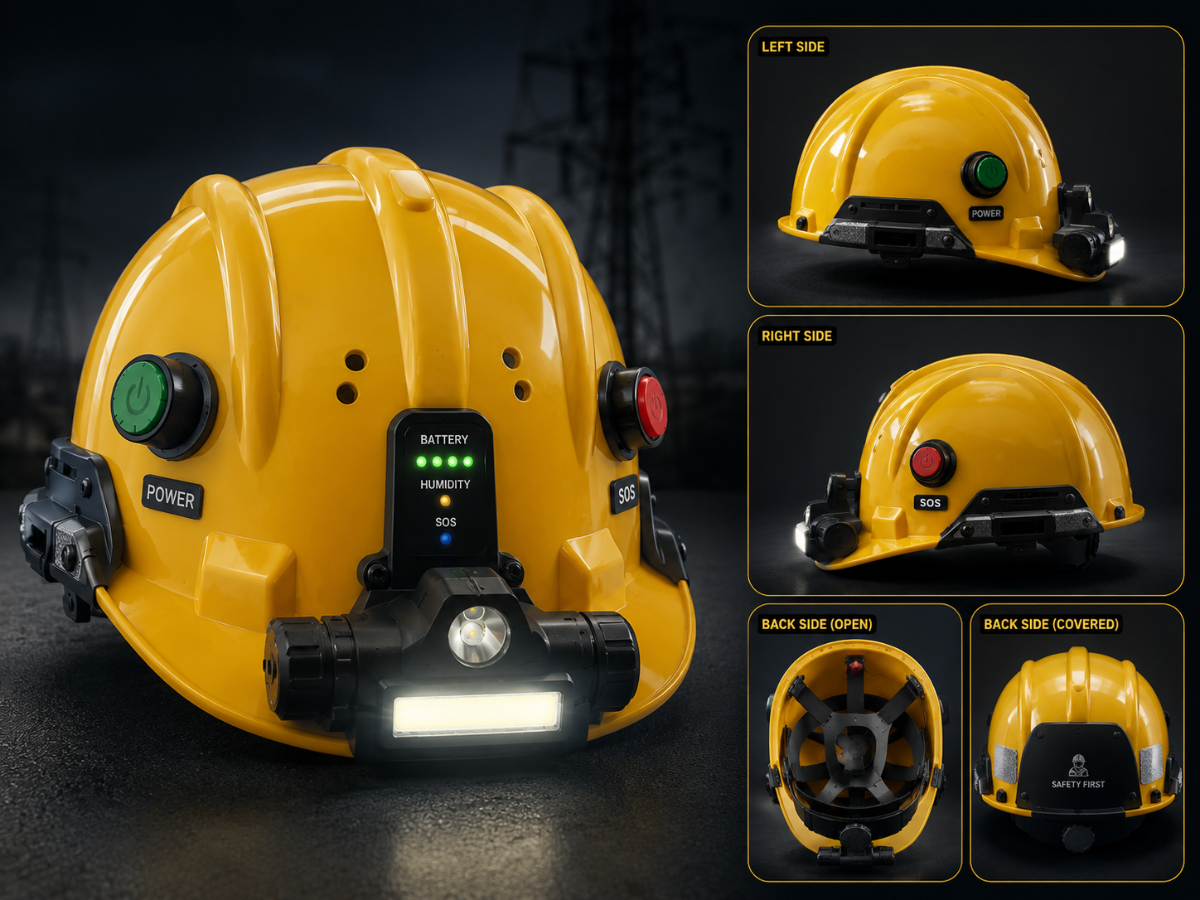
Applications
- Electrical Maintenance
- Utility Companies
- Emergency Repair Teams
- Disaster Management
- Construction Sites
- Mining
- Industrial Maintenance
- Outdoor Rescue
Future Improvements
- Solar Charging
- Waterproof Enclosure
- 360° Rotating Light
- Lithium Battery Pack
- Wireless Emergency Alert
- GPS Tracking
- Bluetooth Diagnostics
Conclusion
The Automatic Smart LED Work Light provides an intelligent, hardware-based safety solution for electrical linemen. By combining automatic beam switching, environmental sensing, emergency signalling, and efficient power management without using any microcontroller, the system improves worker safety, reduces manual effort, and enhances reliability during field operations.


