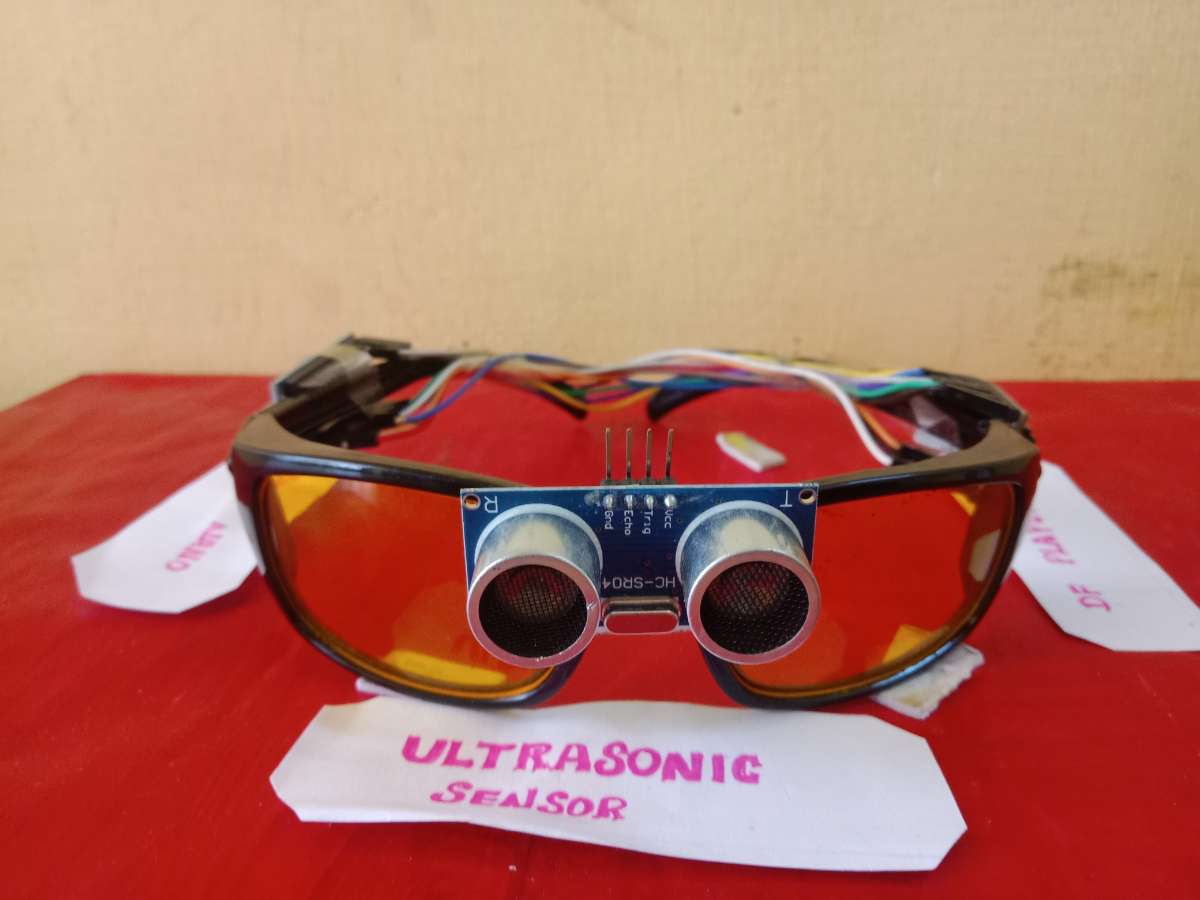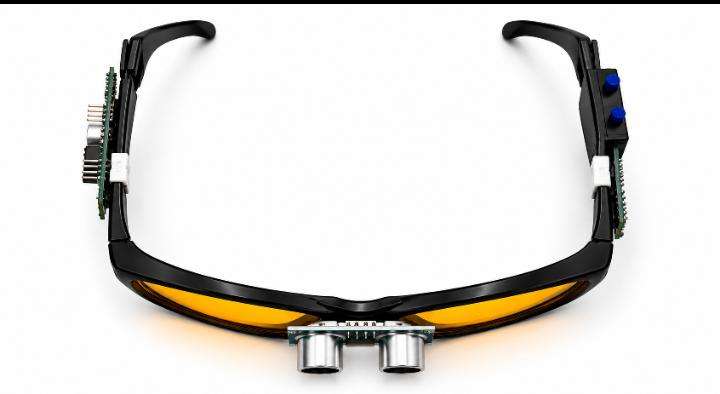



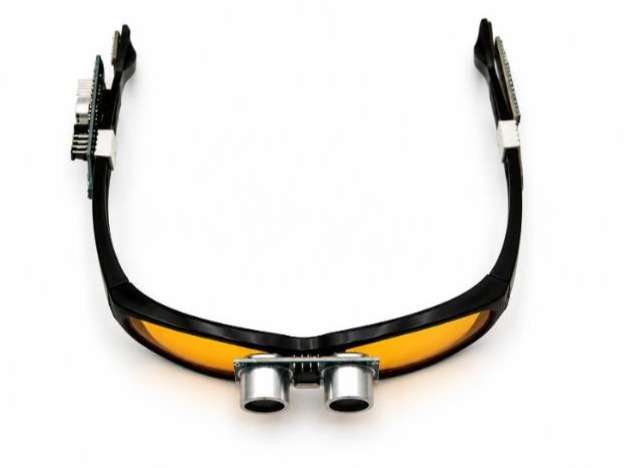
The Blind Glass for Visually Impaired Using Audio is a wearable assistive device designed to help visually impaired people move safely and independently. First, an ultrasonic sensor mounted on the glasses continuously scans the surroundings and detects obstacles in front of the user. The sensor sends distance information to a microcontroller such as an ESP32 or Arduino. The microcontroller processes the data and determines how close the obstacle is. When an object is detected, the system provides audio feedback through a speaker or earphones. If the obstacle is far away, a slow warning sound is produced; as the object gets closer, the warning sound becomes faster or a voice message is played. This allows the user to understand the environment and avoid collisions. The entire system is powered by a rechargeable battery and is lightweight enough to be worn comfortably as smart glasses. Such systems are commonly built using ultrasonic sensing and audio guidance technologies for obstacle detection and navigation assistance. Step 1: Gather Components
Collected all the required components:
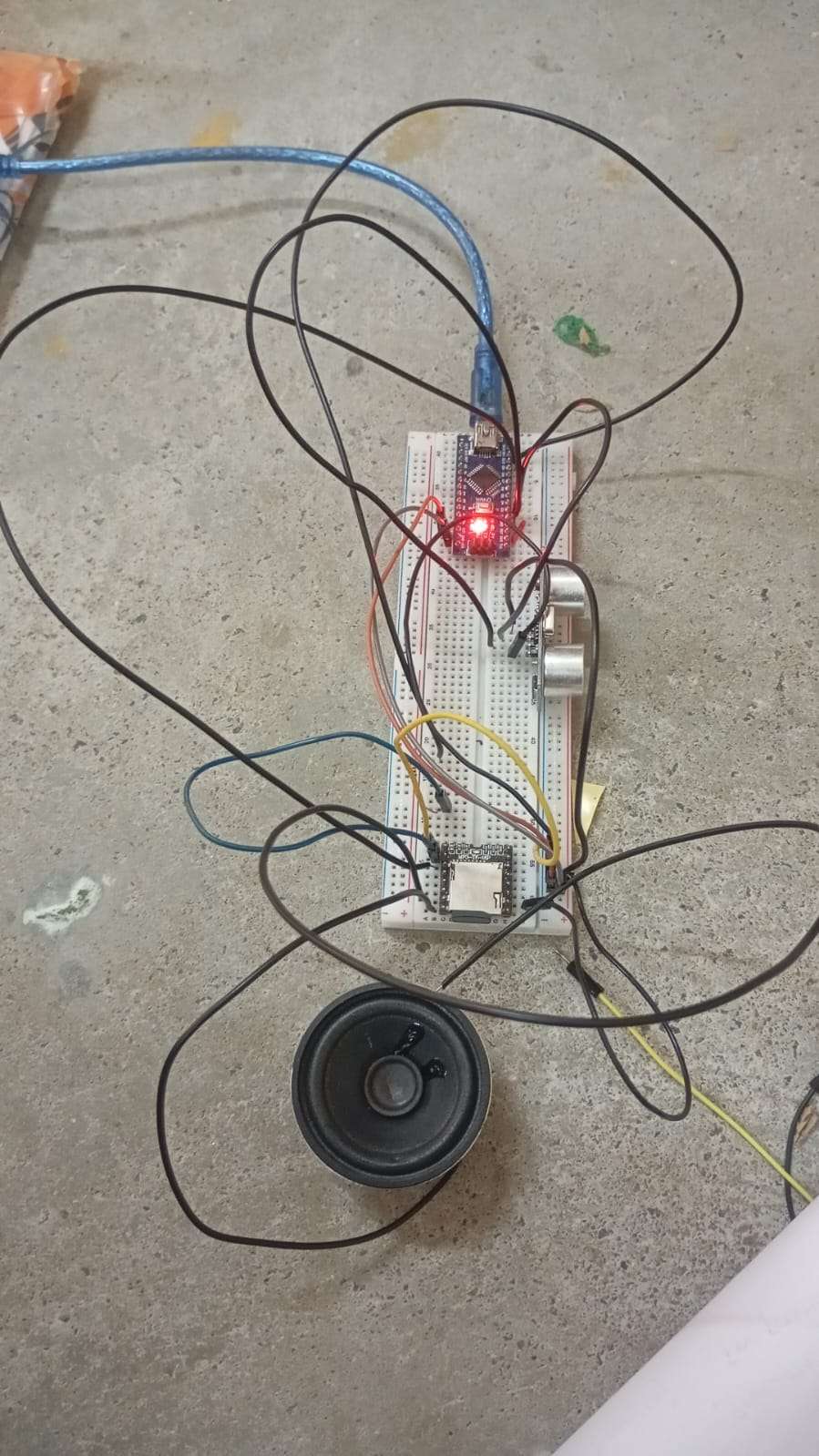
Arduino Nano
Ultrasonic Sensor
DFPlayer Mini MP3 Module
Mini Speaker
Rechargeable Lithium Battery
Jumper Wires
Resistors
Glass Frame
Step 2: Connect the Circuit
Connected the ultrasonic sensor to the Arduino Nano to detect obstacles. Connected the DFPlayer Mini and speaker to play audio alerts. Connected the rechargeable battery to power the circuit.
Step 3: Upload the Program
Uploaded the Arduino code using the Arduino IDE. The program continuously checks for obstacles and sends voice alerts when an object is detected.
Step 4: Fix Components on the Glass
Mounted the ultrasonic sensor at the front of the glasses. Fixed the Arduino Nano, DFPlayer Mini, battery, and speaker securely on the frame.
Step 5: Testing
Powered on the smart glasses and tested them by placing objects at different distances. The glasses successfully detected obstacles and provided voice alerts through the speaker.
Step 6: Final Project
The completed smart glasses help visually impaired users walk safely by detecting nearby obstacles and providing clear audio guidance.
Video