



DigiKey MyList- https://www.digikey.in/en/mylists/list/PNP66OEY8S
The Personalized Sound Sanctuary: A Comprehensive Tinnitus Management System
This project is an ambitious and compassionate integration of cutting-edge hardware and personalized software, designed to provide individuals suffering from tinnitus with an accurate tool for self-monitoring, objective data collection, and targeted therapeutic intervention. It recognizes that tinnitus is not just a sound, but a deeply personal, often stress-driven experience, and offers a holistic platform for gaining control.
(0).jpg)
I. The Core Intelligence: A Stable and Responsive Foundation
At the heart of this system lies a sophisticated, purpose-built hardware platform ensuring speed and reliability for complex tasks:
The Brain (ESP32 Microcontroller): The robust ESP32 is the engine driving the entire operation. Far more than a simple chip, it is the secure bridge that simultaneously manages high-speed sensor data, drives the graphical interface, handles complex communication protocols for the mobile app, and orchestrates the delicate timing required for precise audio generation. It provides the reliable processing power necessary for a continuous, uninterrupted monitoring experience.
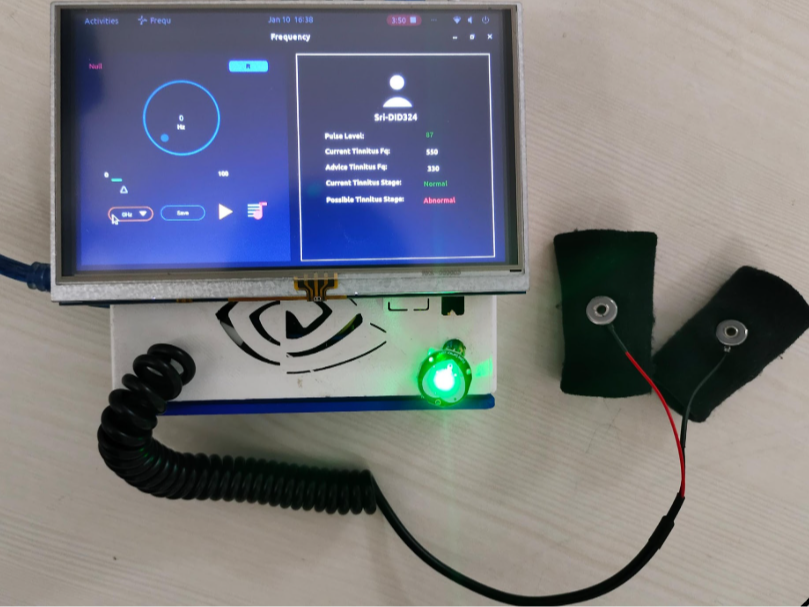
The Visual Window (RA8875 & LCD): To ensure maximum clarity and ease of interaction, the system utilizes a high-quality LCD display governed by the powerful RA8875 driver. This dedicated graphical processor handles the heavy lifting of rendering rich, complex survey pages instantly, freeing the ESP32 to focus on data collection. This careful design ensures that the physical interface is always responsive, clear, and easy to use, even during high-demand monitoring sessions.
Sustained Energy (Power Supply): A carefully selected power supply is integrated to deliver consistent and clean energy, which is crucial for maintaining the accuracy of the highly sensitive physiological sensors and the integrity of the high-fidelity audio system.
II. Bridging the Mind and Body: Objective Physiological Monitoring
The system distinguishes itself by acknowledging the critical link between stress, arousal, and tinnitus perception. It gathers objective data that reflects the patient’s inner state:
The Emotional Barometer (Sweat Sensor): This sensor measures subtle changes in skin conductance (electrodermal activity). This highly sensitive metric serves as an objective window into the user's autonomic nervous system—their stress, anxiety, or emotional arousal level. By capturing this data, the system can identify moments when the patient's body is most stressed, allowing them to draw clear correlations between physiological state and the perceived intensity of their tinnitus.
The Rhythmic Baseline (Heart Rate Sensor): Continuous monitoring of the heart rate provides foundational data on the patient's cardiovascular response. This metric acts as a crucial baseline, confirming the presence of physiological stress or relaxation, providing a valuable context for interpreting the subjective tinnitus reports.
III. The Patient’s Voice: Subjective Data and Personalized Assessment
The hardware interface provides a dedicated, direct channel for the patient to communicate the nuanced, subjective nature of their condition:
The Coded Experience: The full of coding encompasses the precise logic needed to translate patient input into actionable data. The system presents a structured survey page—the primary input method—that moves beyond simple pain scales. Patients use this interface to meticulously detail their current tinnitus level, its character (e.g., buzzing, ringing, hissing), and other relevant contextual details surrounding their experience, empowering them to characterize their unique burden accurately.
.png)
IV. Precision Sound for Therapeutic Relief
Recognizing that acoustic intervention must be flawless, the system is engineered for superior audio quality:
High-Fidelity Sound Generation (PCM5102 DAC): The project incorporates the PCM5102 External Digital-to-Analog Converter (DAC). This specialized component is non-negotiable for producing the clean, undistorted analog output signals required for effective tinnitus management. Whether generating precisely tuned masking noise, habituation signals, or high-fidelity therapeutic tones, the PCM5102 ensures that the sound reaching the patient is therapeutically accurate, avoiding the jitter and distortion common in lower-quality integrated DACs.
V. Empowerment in the Palm of the Hand: The Companion Application
The user's control center is the sophisticated Companion Mobile Application, turning raw data into meaningful insights and actionable relief:
Secure Command Center: The login interface ensures patient confidentiality and personalized access to sensitive health data, establishing trust and security as foundational elements.
Data Driven Insights: The app displays all the bio—a rich, graphical visualization of the collected heart rate and sweat data—alongside the subjective tinnitus reports. This powerful comparison helps the user and clinician visualize patterns, identifying triggers and verifying the efficacy of interventions.
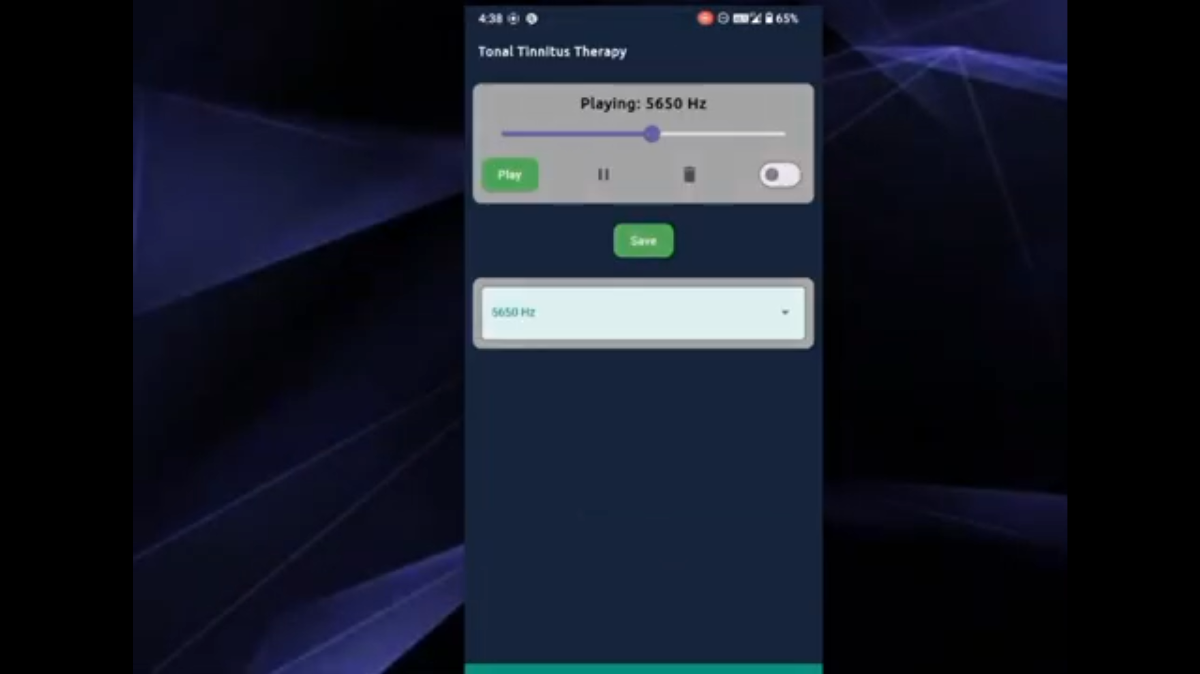
Personalized Frequency Tuning: The app offers critical, real-time control through its frequency adjustment feature. Users can manipulate the characteristics of the acoustic output signals generated by the hardware, allowing them to precisely tune the masking or therapeutic sounds to their specific tinnitus frequency and intensity.
.png)
Integrated Wellness Library: The app includes a curated library of default audios, songs, and music, offering immediate access to relaxation tracks, tailored masking sounds, and therapeutic auditory stimuli, instantly deployed via the high-quality PCM5102 DAC.
.png)
In summary, this project is not merely a collection of electronics; it is a meticulously engineered system designed to put the power of personalized management back into the hands of the individual, transforming the confusing noise of tinnitus into understandable data and targeted relief.
Simple step by step easy process :
Step 1: System Initialization and Power-Up
- Power Activation: The stable Power Supply delivers clean energy to all components (ESP32, DAC, sensors, and display).
- Core Boot-Up: The ESP32 Microcontroller initializes its firmware, establishing communication protocols (Wi-Fi/Bluetooth) for the mobile app.
- Display Setup: The RA8875 Driver prepares the LCD Display to render the user interface.
Step 2: Continuous Physiological Monitoring
- Objective Data Acquisition: The Heart Rate Sensor and the Sweat (GSR) Sensor begin continuously measuring the patient's pulse and stress levels.
- Sensor Data Processing: The ESP32 collects and processes this raw sensor data, converting it into standardized physiological metrics.
Step 3: Local User Interface and Subjective Input
- Survey Display: The system renders the Survey Page on the LCD, prompting the user for input.
- Subjective Data Collection: The user manually enters their current tinnitus level and other contextual details via the local interface.
- Local Data Storage: The ESP32 timestamps and stores both the objective sensor data and the subjective survey data.
Step 4: Companion App Connection and Data Visualization
- Secure Access: The user logs into the Mobile Application using the Login Interface.
- Data Synchronization: The app establishes a connection with the ESP32 and downloads the latest collected data.
- Biometric Visualization: The app displays all the bio (Heart Rate and Stress data) alongside the subjective tinnitus reports, allowing for trend analysis.
Step 5: Personalized Therapeutic Intervention
- Audio Selection: The user either selects a track from the Audio Library (default audios, music) or initiates a tone for masking/therapy.
- Frequency Adjustment: The user precisely manipulates the Frequency Adjustment feature in the mobile app.
- Signal Generation: The ESP32 receives the user's settings, generates the digital audio signal, and sends it to the PCM5102 External DAC.
- Analog Output: The PCM5102 converts the digital signal into a high-fidelity analog sound output, delivered to the user for intervention.
Working Video link :


