






Our voice bot project initially started as an educational initiative to explore robotics and voice-controlled systems.
The first version was a simple three-wheeled robotic car controlled through voice commands, helping us understand the fundamentals of microcontrollers, motor control, and wireless communication.
version 1.0 :
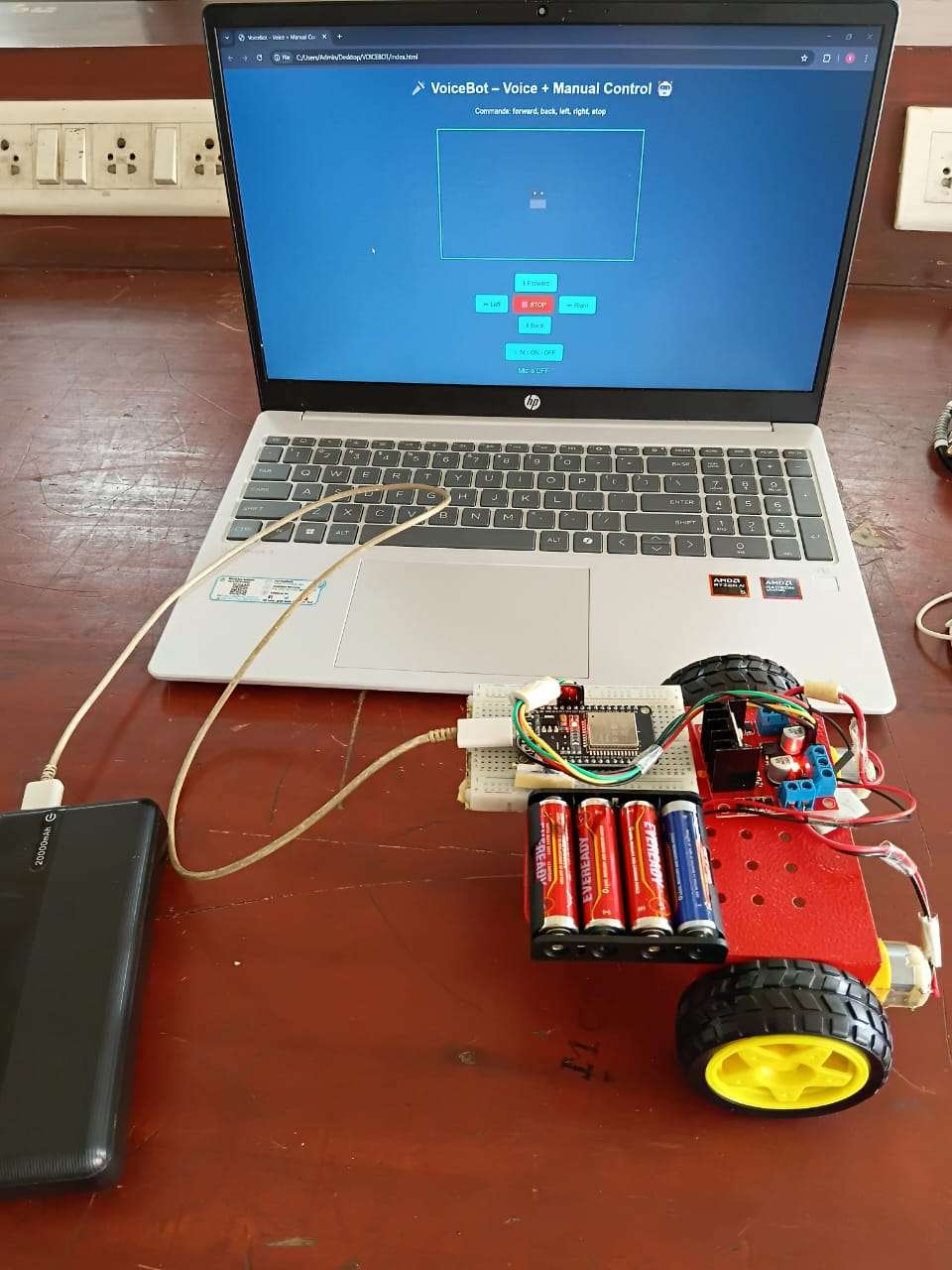
- During testing, we encountered several challenges, including unclear voice input due to environmental noise, high Wi-Fi latency that caused delayed responses, and a basic user interface that was not user-friendly.
- To address these limitations, we developed a second version featuring a four-wheeled design for improved stability and performance.
- We integrated noise-cancellation techniques for clearer voice recognition, optimized communication for faster response times, and implemented PWM-based motor control to achieve smoother and more precise movement.
- Building on these improvements, we further enhanced the system by integrating Firebase for real-time data synchronization and remote device management.
This latest version introduced offline control capabilities and improved speech recognition, making the voice bot more reliable, responsive, and practical for real-world applications.
version 1.1:
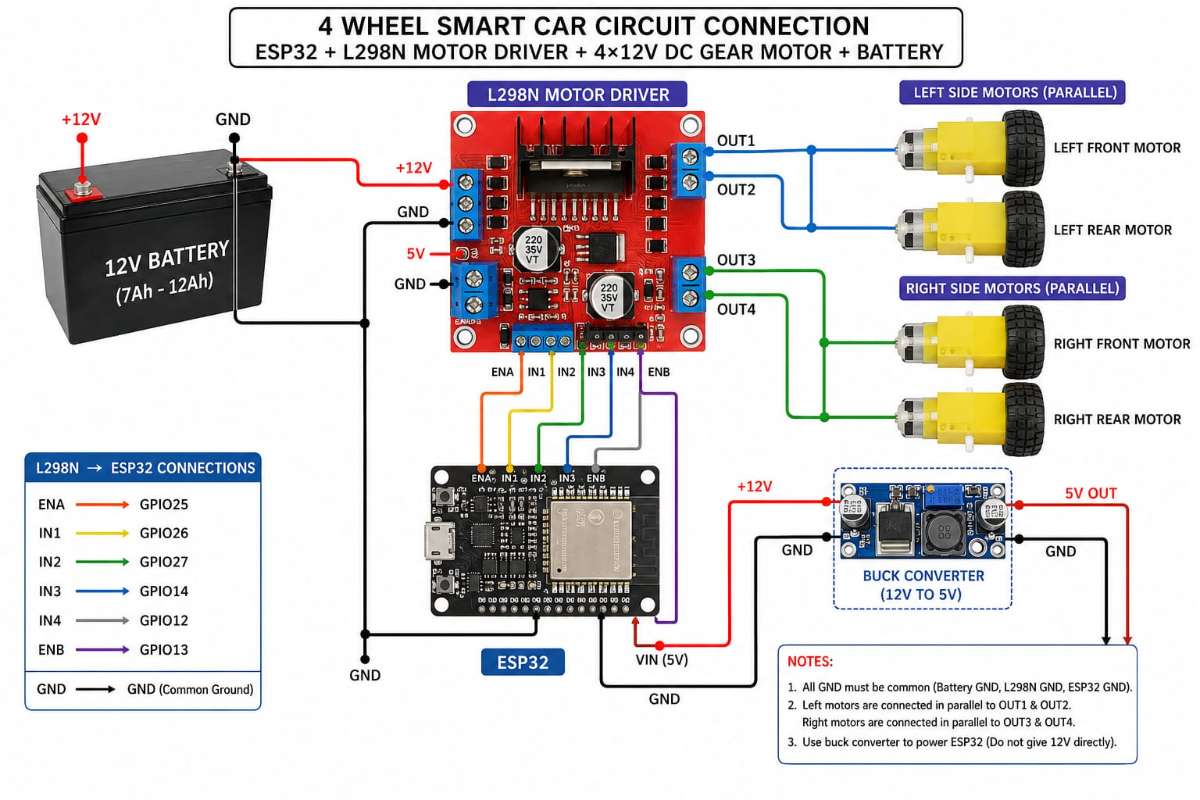
.jpeg)
- Through continuous development, testing, and refinement, the project evolved from a basic educational prototype into a more advanced and intelligent voice-controlled robotic system.
- To develop an intelligent voice-controlled robotic system that enables natural, accessible, and efficient human-machine interaction while reducing dependence on manual controls.


