




How We Built the Smart Waste Management System
Step 1: Problem Identification
We identified that manual waste segregation is inefficient, unhygienic, and reduces recycling efficiency. Our goal was to build an automated smart dustbin capable of identifying and separating different types of waste while providing real-time monitoring.
Step 2: Hardware Design
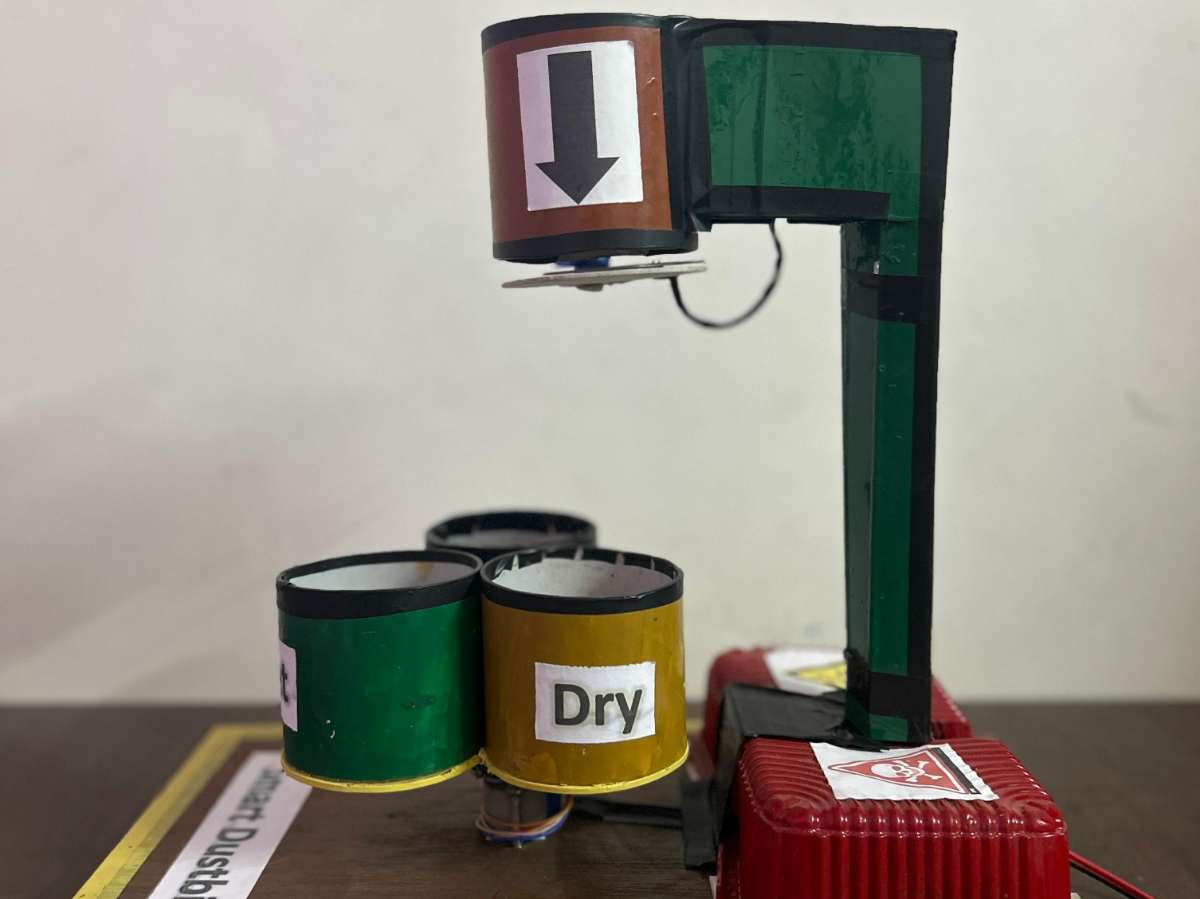
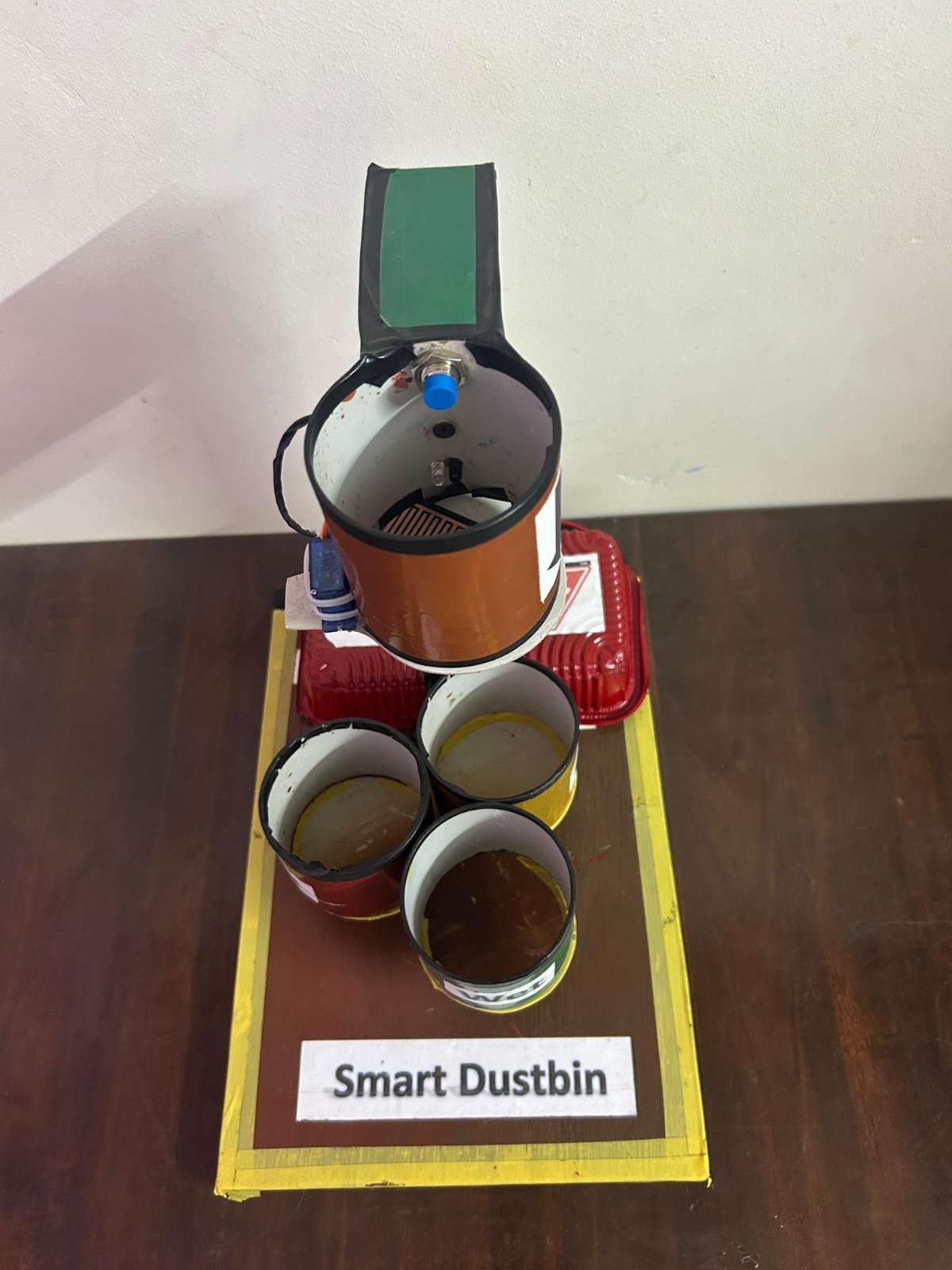
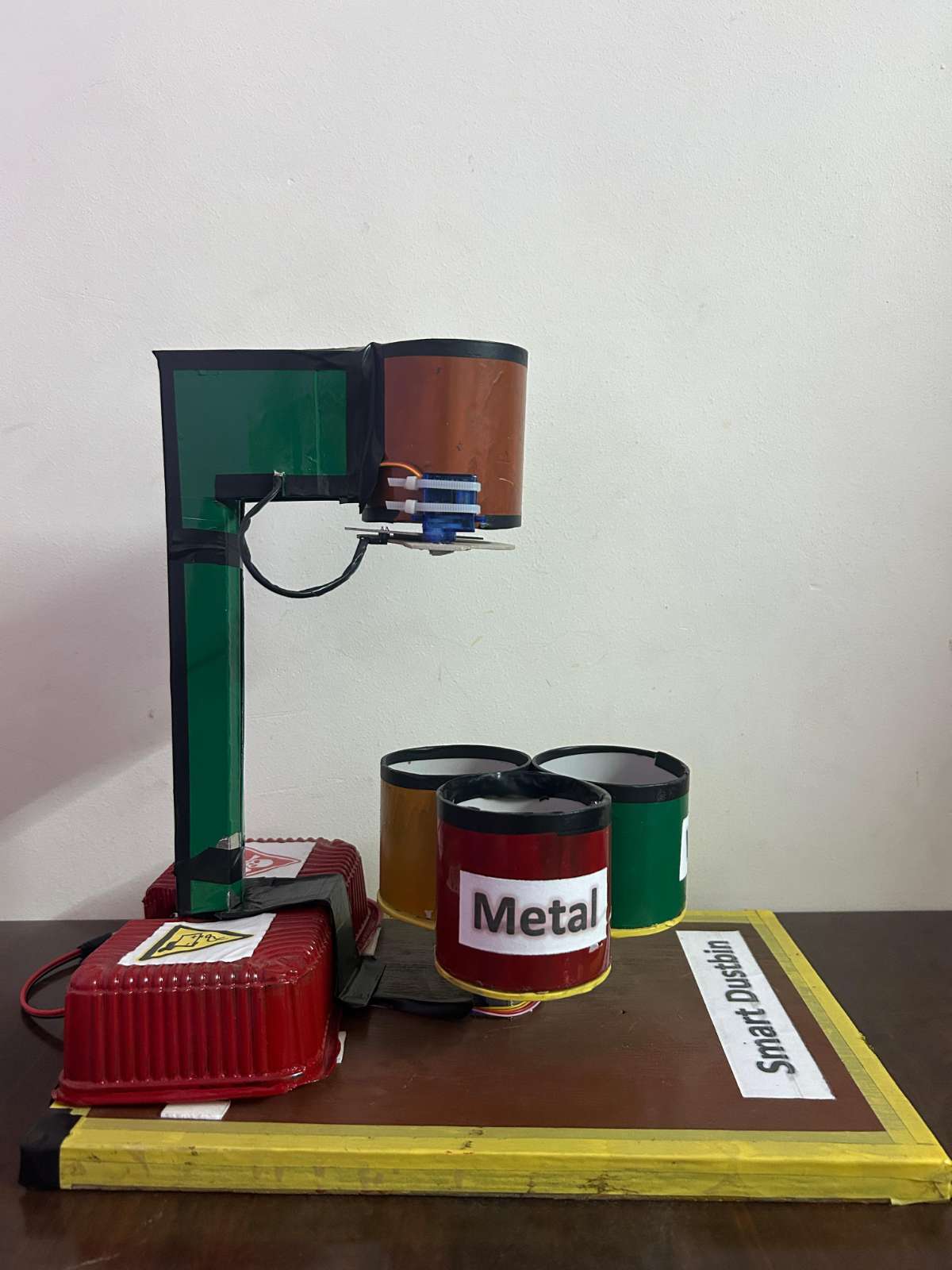
We assembled the hardware using an Arduino UNO and NodeMCU (ESP8266). The system includes an IR sensor for object detection, a proximity sensor for initiating the segregation process, and a rain/moisture sensor to identify wet waste. A servo motor controls the lid, while a stepper motor rotates the internal mechanism to direct waste into the appropriate compartment. A buzzer alerts users when the dustbin is full.
Step 3: Circuit Integration
All sensors and actuators were connected to the Arduino UNO. The NodeMCU communicates with the Arduino and hosts a Wi-Fi-enabled web dashboard for live monitoring and data visualization.
Step 4: Software Development
The embedded software was developed using Arduino IDE and Embedded C. The control logic reads sensor values, classifies the waste, operates the motors, updates waste counts, and triggers alerts when required.
Step 5: Web Dashboard
A responsive dashboard was developed using HTML, CSS, and JavaScript. It displays real-time counts of wet, dry, and metal waste, system status, analytics, and full-bin notifications over a local Wi-Fi network.
Step 6: Testing and Calibration
The prototype was tested with different waste materials. Sensor thresholds and motor timings were calibrated to improve segregation accuracy and ensure reliable operation.
Step 7: Final Prototype
The completed system automatically opens the lid, detects the type of waste, segregates it into the correct compartment, updates the live dashboard, and notifies users when the dustbin reaches its maximum capacity. The project demonstrates an IoT-enabled, automated solution for smart waste management and sustainable urban environments.
.jpg)


