



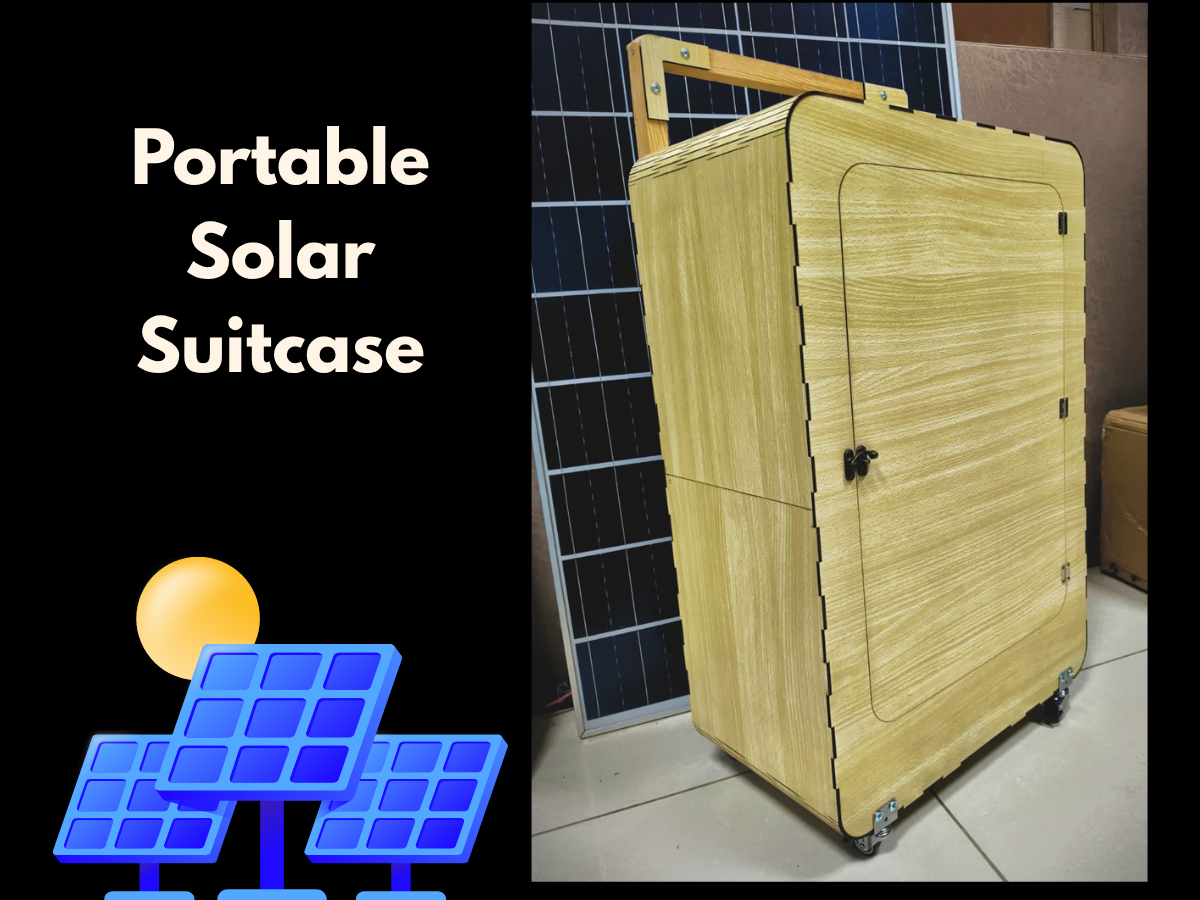
In this project, we’ll walk through the making of a portable solar generator, designed as a suitcase-style system that’s both compact and functional. Whether you're powering devices outdoors, at a remote campsite, or during emergencies, this solar suitcase makes clean, off-grid power practical and portable.
Built using laser-cut MDF panels, foldable solar panels, and Li-ion battery storage, this system offers multiple output ports (USB, DC, AC) and includes a charge controller for battery management. You can customize the size, capacity, and port options to fit your specific use case.
Problem Statement
Reliable electricity remains a challenge for many people who work or live in areas with limited access to power. Street vendors, small shop owners, campers, and people in remote locations often rely on heavy lead-acid batteries or fuel-powered generators to run lights, charge devices, and power small appliances. These solutions can be expensive, difficult to transport, require frequent charging or fuel, and have a negative environmental impact. There is a growing need for a clean, portable, and sustainable energy solution that can provide power on the go without depending entirely on the electrical grid.
Our Solution
To address this problem, we developed a portable solar-powered generator housed inside a compact suitcase-style enclosure. The system integrates solar panels, a lithium-ion battery pack, a charge controller, USB charging ports, and an AC inverter to provide reliable off-grid power. Street vendors / Campers can use it to power lights, charging stations, or small electronic devices throughout the day while simultaneously recharging the battery using solar energy. Its portable design makes it easy to carry, deploy, and store, offering a cleaner and more sustainable alternative to conventional batteries and fuel-based generators. By harnessing renewable energy, this project promotes energy independence while making clean power more accessible and affordable.
Step 1: Laser Cut the Suitcase Body
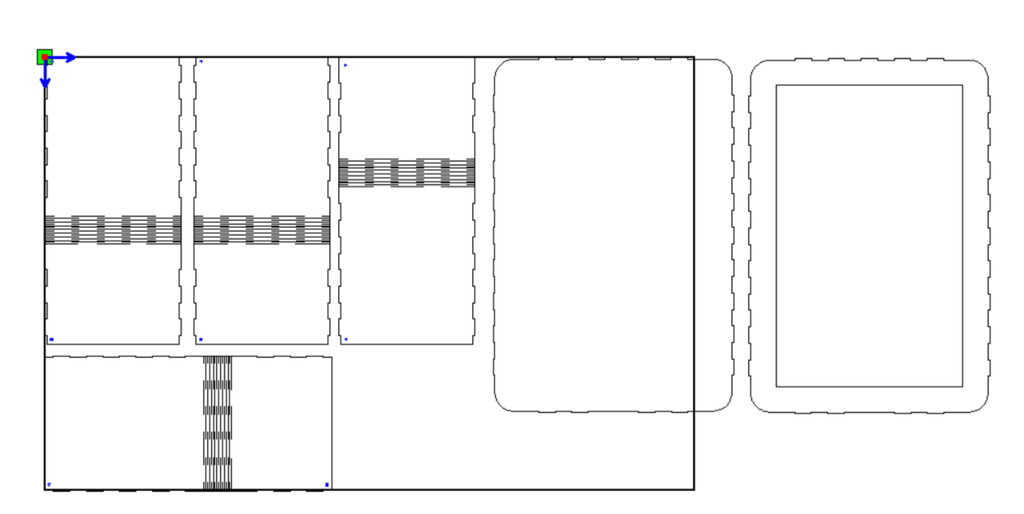
We started by designing the body using RDWorks software and laser cutting the components out of MDF board. The suitcase is modular and sized just enough to house batteries, controllers, and wiring, while keeping portability in mind.
The file used for laser cutting are attached below.
We used a 3.3mm thick MDF Board for this project.
Tip: Use tabs and slots to ensure tight-fitting joints and reduce glue usage. After cutting, sand the edges for clean assembly.
Step 2: Assemble the Main Structure
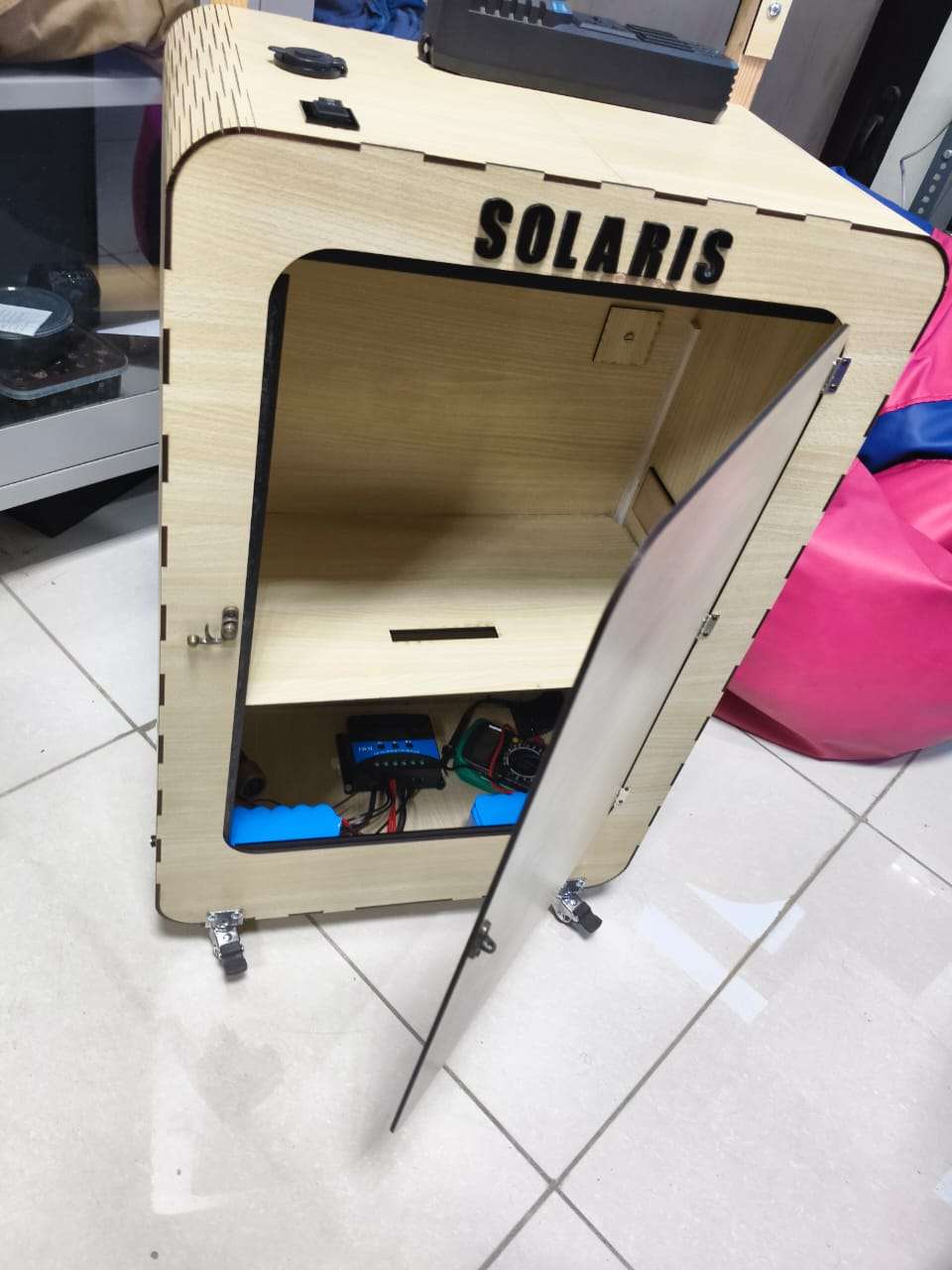
Using the laser-cut panels, we built the box using super glue and screws where needed.
The back portion houses the foldable solar panel mounted using small hinges, while the bottom half includes the battery compartment and the charge controller.
We attached wheels to enhance portability.
Make sure to leave space and make holes for wires.
Step 3: Wiring and Electronics Setup
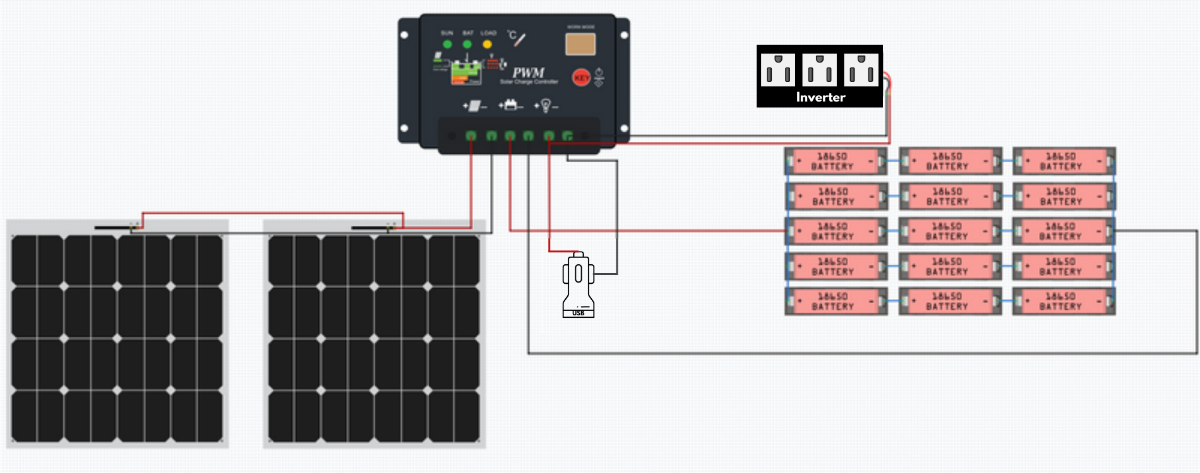
Use the above Circuit Diagram to complete the circuit.
Ensure that there are no short circuits and all connections are properly done before powering on the load (inverter and USB ports).
Step 4: Testing and Finishing
.jpg)
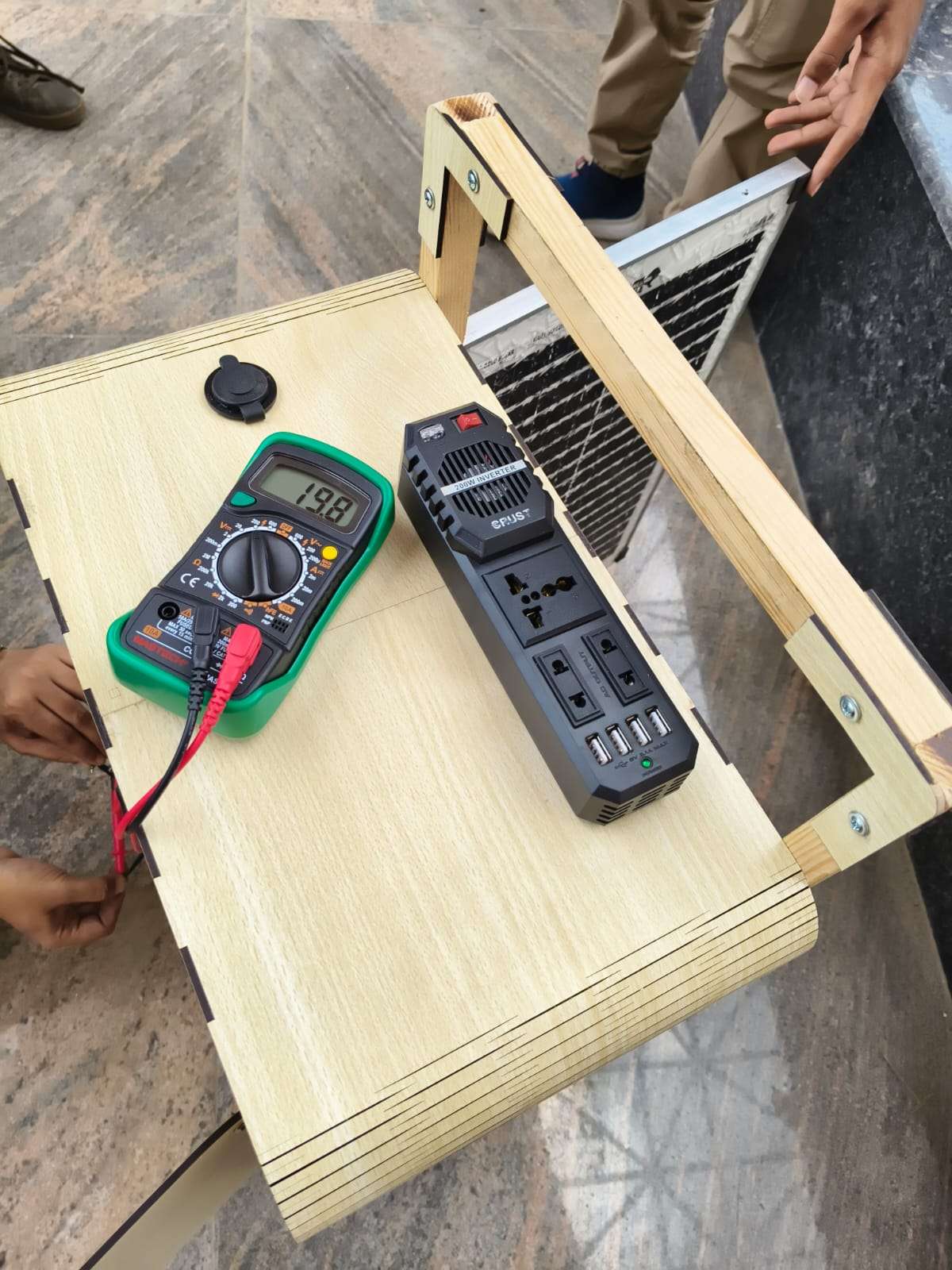
Once the circuit was verified, we closed the case, connected the solar panel to charge the batteries, and tested the output.
We were able to get around 22 volts in direct sunlight, while got around 18-20 volts in indirect sunlight.
The system can be used to power LED Bulbs, mobile phone, laptop and a small fan with ease.
For aesthetics, we polished the MDF, added handles, and made the setup easy to carry.
You can add labels, paint, or even vinyl wrap to personalize it further!
Step 5: Conclusion
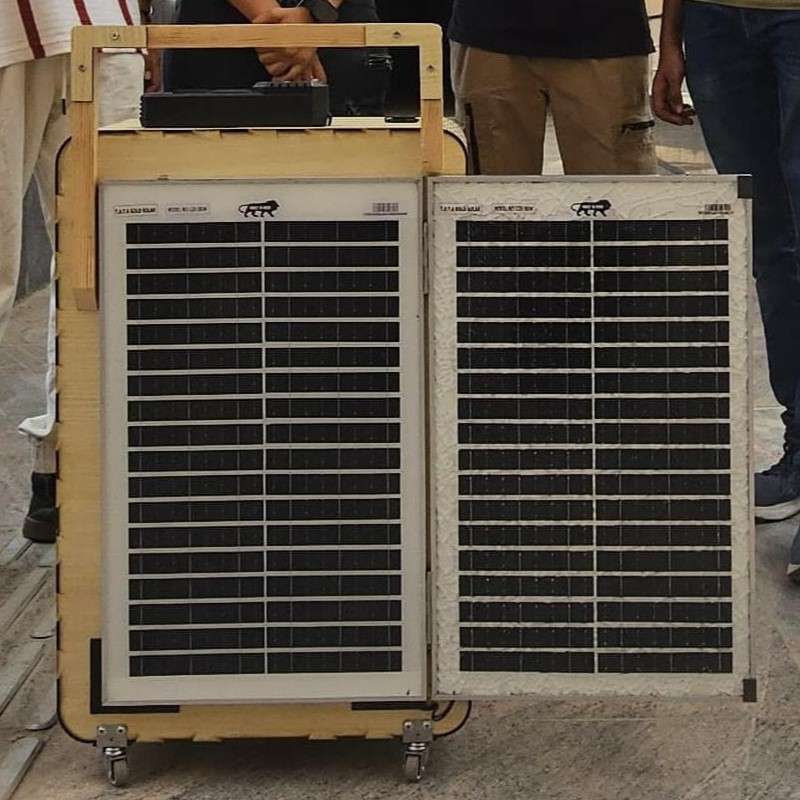
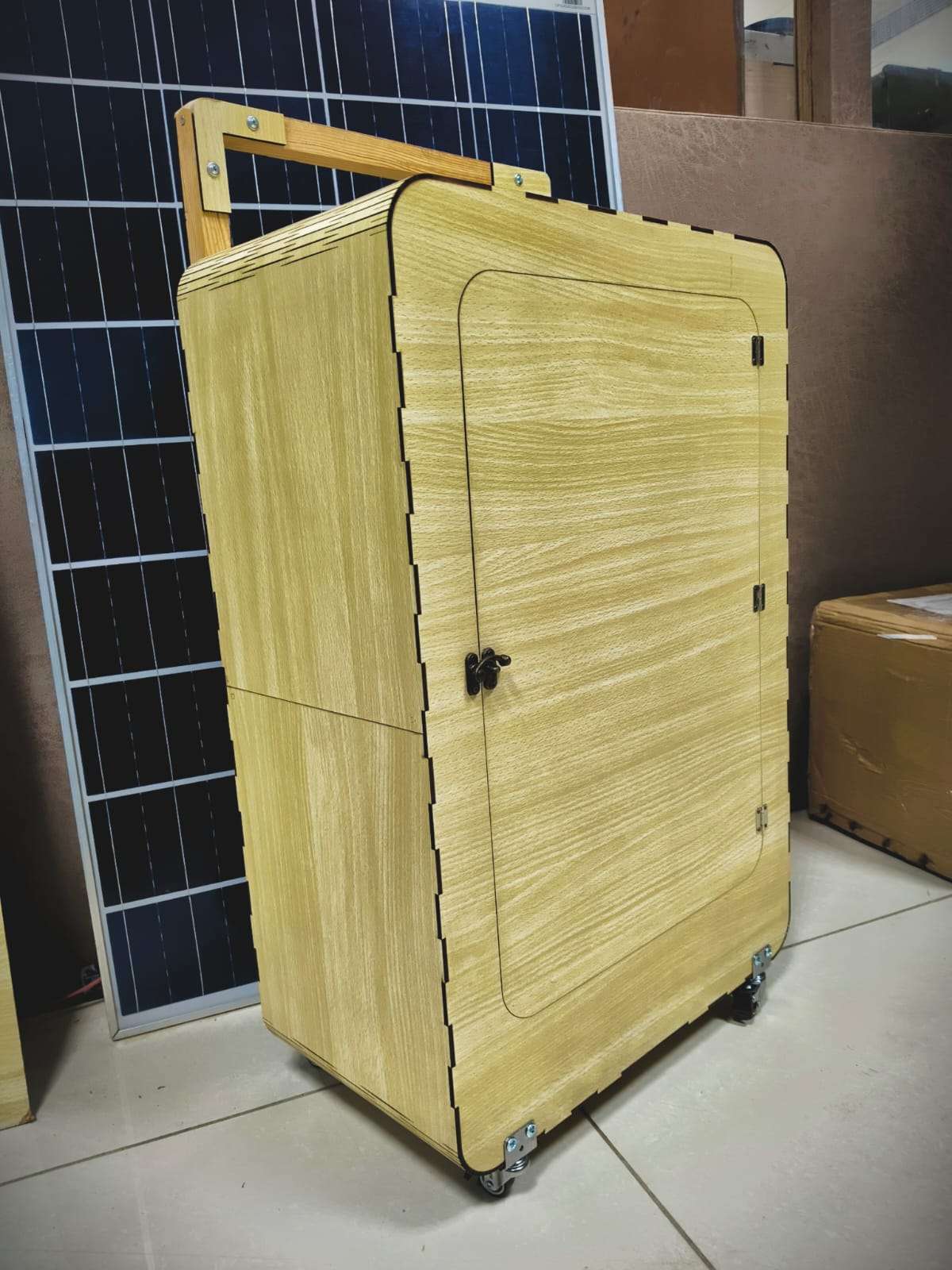
And there you have it, a compact, foldable, and functional solar generator you can carry like a suitcase!
Perfect for emergency use, outdoor activities, or for simply promoting sustainability.
This is a great beginner-to-intermediate project for those exploring renewable energy, DIY electronics, or laser-cut design. Feel free to modify it based on power needs or available materials.
This project was brought to life during the Changemakers 2025 Bootcamp at IIT Delhi, where we got the opportunity to prototype, test, and refine this idea with the help of experienced mentors and access to the MakerSpace. The entire journey, from ideation to building a working prototype, was an incredible learning experience in sustainability, design thinking, and hands-on innovation.
If you want to explore more, check out my profile for related projects, and don’t forget to follow me for updates on new tutorials and advanced projects!


